Blog

  • Asim Jofa delivers first batch of protective suits

    Asim Jofa delivers first batch of protective suits

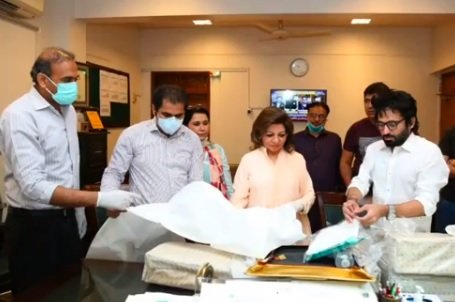
    Renowned designer Asim Jofa, who stepped forward to help the government procure protective suits, has delivered the first batch of protective suits to the team of Dr Seemin Jamali at Jinnah Post Graduate Medical Center (JPMC).

    The designer shared the announcement on social media along with a slideshow of his team delivering the suits to the hospital and Dr Seemin inspecting them.

    Jofa on March 28 had announced that he and his team have taken the “initiative to contribute to society and play our part in helping our front liners win this fight against coronavirus.” He said that his company had started working on stitching protective gear for doctors and medical staff to wear for their safety.

    The designer shared updates throughout the process.

    The designer asserted that he and his team stand with the nation and the Government of Pakistan in these testing times.

    https://twitter.com/asimjofa/status/1246084172634095617?s=20

    In an interview with a daily publication, Asim shared that he got the idea about producing these suits after he read a story on Bloomberg about how there was a shortage of PPE in Italy and Spain.

    “It got me thinking about the situation in my own country,” he says.

    Jofa has produced two types of PPE: fawn and white coloured ones. The fawn-coloured suits are for the use of doctors working in wards and the white ones are for doctors working in intensive care units or the special isolation wards. The designer explained that the white suits have 3M layering, making them able to be washed and reused up to 15 times while the fawn ones are only for five-time use.

    Jofa’s initiative prompted other designers including Maheen Khan and Deepak Perwani to do the same and help produce PPE for healthcare workers who are putting their lives on the line to combat the pandemic.

    Meanwhile, Deepak Perwani also shared the first look of the washable/reusable and disposable suits he has made.

    There is a dire shortage of protective medical gear in the country and across the world and designers all over the world from Louis Vuitton to Ralph Lauren are stepping up to meet the demand.

  • Spoiler-free review: ‘Money Heist Part 4’ — almost a left-wing masterpiece

    Spoiler-free review: ‘Money Heist Part 4’ — almost a left-wing masterpiece

    Resistance is in the air…

    A state down to its knees… institutions crumbling… and rising are the people…

    “In this world, everything is governed by balance. There’s what you stand to gain and what you stand to lose. And in this moment, they think they have nothing to lose. And when you believe you’ve got nothing to lose, you’re overconfident. We will be the ones that are going to show them just how much they have to lose.”

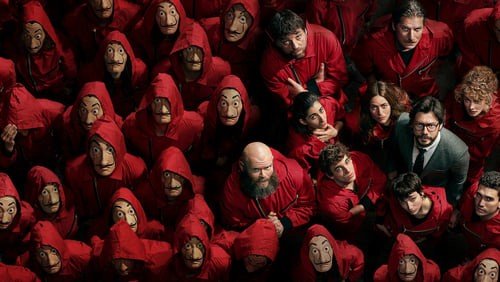
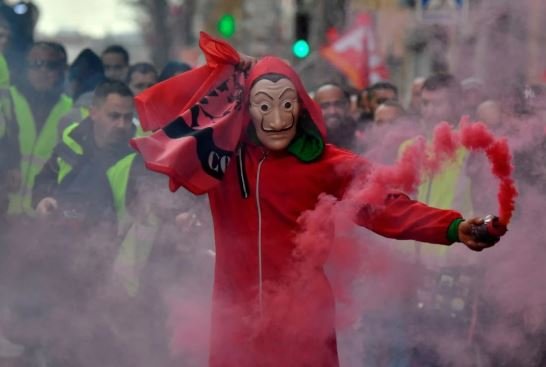
    Remember these words by Professor (Alvaro Morte)? Well, they are exactly what are gradually but surely making Netflix’s very popular ‘La Casa De Papel [The House of Paper]’ aka ‘Money Heist’ even better and almost a left-wing masterpiece.

    It won’t at all be a stretch to say the three previous seasons had set the bar a bit too high for the makers, but what has been dropped amid global lockdowns and after nine long months, every second of it is worth the wait.

    An action-packed and smashing part four of the series is out, and to be as honest as we can be without giving any spoilers, we are more thrilled than ever after having watched the eight bingeworthy episodes.

    For a little recap, the previous season showed Professor’s gang entering the Central Bank of Spain to get Rio (Miguel Herrán), who had been detained while on the run, rescued; and execute the late Berlin’s (Pedro Alonso) dream heist plan.

    However, the police and intelligence’s actions leading to a lot of mess, Professor’s plans fail, Raquel aka Lisbon (Itziar Ituño) ends up being captured after the authorities fake her execution for Professor and friends, Nairobi (Alba Flores) is fighting for her life, and the entire gang is kind of cornered.

    The only support they seem to have is that of some foreign nationals operating remotely, including Pakistanis.

    The fourth season, as anticipated, picks up from where the makers left us hanging.

    Since this, as said earlier, is a spoiler-free review, we won’t tell you what happens as Professor, in a hopeless condition, deals with the supposed loss of a loved one; the group deals with internal conflicts and a desperate police force tightening the noose around them, while an “assassin” is also on the loose inside the bank.

    As seen in the trailer, security chief of the Bank of Spain’s governor, Gandia (José Manuel Poga), a new and ruthless villain, somehow manages to take on the gang and believe you us, causes mayhem.

    Now that the police have a key member of the group, Lisbon, they are using her as a pawn to dig out information, while things inside the bank, on the other hand, are also getting out of hand BIG TIME because of Palermo (Rodrigo de la Serna) and others acting impulsively as always and costing themselves dearly.

    While what is to be done with all the gold inside the bank is yet to be revealed, some tightly-tied knots from the last season have been loosened as flashbacks from Berlin and other members’ shared lives make the show a rollercoaster ride.

    Here’s some good news: when you’re done watching the show and don’t really know what to do with your life anymore, Netflix is going to give you a little surprise.

    The episodes are joined by a little behind-the-scenes surprise that features the 2019 Lebanese revolution.

    Money Heist: The Phenomenon’ is a documentary on how the show has made an impact around the world. It is narrated by the series’ writer and includes interviews with the cast members viewers have grown to love.

    Over the course of an hour, the film explains the show’s unexpected boom in popularity and interestingly dives into the cultural impact of it that was almost lost to television history.

  • The Common Good

    “Pure capitalism is basically selfish in nature and it leads to a particular attitude in the rich — that they deserve to be wealthy and the poor are poor because they are either lazy or stupid or both — or else because they are just an ‘inferior species’.”

    A friend in Karachi describes the unease that fills shoppers at an affluent Karachi supermarket when they step out of the store laden with as much as they can buy amid the coronavirus lockdown. They are faced with the sight of desperate day labourers standing outside staring quietly as they load bags of food supplies into their cars. The labourers hold the tools of their trade — shovels and pickaxes — and to the affluent shoppers, these now appear to be dangerous weapons.

    “They are starving,” says my friend, “their families don’t have food, they could be driven to despair and could easily attack shoppers to get food”.

    The public response to the crisis has been impressive in Pakistan, but can such efforts provide the scale of relief that is needed in a country where, according to a 2016 national assessment, almost 40 per cent of the population lives in poverty? People have donated generously to schemes that deliver basic rations to those in need and many organisations and individuals have mobilised their time and resources to feed the hungry but reports seem to indicate that this is proving woefully inadequate. The livelihood of so many households has been affected that the knock-on effect is totally devastating. Apart from those dependent on a daily wage, those running small business initiatives or taking on work outsourced from running businesses now have no work, no money and no food.

    And they are being told to stay in their homes and maintain social distancing in public places…

    In such circumstances, riots are a very real possibility. Not just in Pakistan but in other countries as well, particularly those with great social and economic inequality. And interestingly, it is this fear of unrest that is now leading many people to the realisation that depriving people of basic rights is not just an issue for the poor and oppressed but rather it is something that, eventually,  affects everybody — even the very rich and powerful. Pure capitalism is basically selfish in nature and it leads to a particular attitude in the rich — that they deserve to be wealthy and the poor are poor because they are either lazy or stupid or both — or else because they are just an ‘inferior species’.

    “For years the world has been veering towards a nasty form of capitalism in which the erosion of workers’ rights and social welfare is seen as an ‘efficient’ way to manage the economy. But the only thing it did efficiently was enriching and protecting a small minority that lived in a fortress bulwarked by wealth and privilege.”

    This basic lack of social empathy is rooted in the belief that wealth can buy you an island of privilege and anything outside the walls of this wealth is a) not your problem and b) does not affect you. Hence the attitude of the Pakistani glitterati, who spend millions on making their homes into palaces but then just tip their garbage onto the street corner instead of a bin; who spend thousands on fast food and designer outfits but are outraged when a staffer asks them for a salary of a few thousand rupees in advance. It is the same attitude that drives coalitions like the Conservative-LibDem one in the UK to close down public libraries or threaten the funding of the public service broadcaster. Instead of understanding that libraries and public service broadcasting can inform and educate, the attitude is that these are not essential as they have no tangible benefit i.e. profit. Public libraries, in particular, are essential to any civilised society as they provide access to learning, opportunity and advice and also provide resources like computers, printers and internet access.

    In Pakistan, schools and colleges with adequate resources have switched to online learning but what about all of those students from poorer institutions? And what about students who are expected to follow online curriculums but may not have a wifi connection or a laptop? The same question is relevant in the UK even though efforts are being made to cater to students with these sorts of disadvantages, many may fall through the cracks. Just a few months ago when the Labour Party announced a policy of free wifi for all in their election manifesto, the idea was widely derided, scoffed at and dismissed as ‘unworkable’, but now Jeremy Corbyn’s insistence that broadband access should be regarded as a basic right does not seem so ridiculous after all.

    For years the world has been veering towards a nasty form of capitalism in which the erosion of workers’ rights and social welfare is seen as an ‘efficient’ way to manage the economy. But the only thing it did efficiently was enriching and protecting a small minority that lived in a fortress bulwarked by wealth and privilege. But now a virus has illustrated that we are all connected. Ensuring access to basic rights and a proper welfare structure provides for a less insecure society and ‘feel good’ philanthropy and private charity or a mai baap approach to individual staff is simply not enough.

    Perhaps it’s time for all of us to embrace the idea of a socialist society, to recognise the importance of the dignity of labour and the protection of employee rights, to stop privatising and outsourcing and spending compulsively. It’s time for us to completely rethink the way we live.

  • Coronavirus survivors celebrate their negative tests by wrestling

    Citizens of Multan, who recovered from coronavirus after proper treatement and quarantine, celebrated being corona-free by wrestling.

    According to reports, the authorities ensured that the people return to their villages safely after their treatment and quarantine. However, breaking protocol, they decided to hold a wrestling match instead to celebrate their homecoming.

    As a result, these people not only violated the most significant coroanvirus precautionary measure, social distancing but also risked the health of the bystanders.

  • Coronavirus lockdown is making us all fatter: report

    Coronavirus lockdown is making us all fatter: report

    The coronavirus has shaken the world like nothing else. But beyond the terrible toll of death, economic devastation and fear, the virus is likely to leave another lasting mark.

    It is going to make us all fatter.

    “I don’t know if we are going to come out of this experience stronger, but we will have gotten fatter,” nutritionist Beatrice de Reynal told AFP, adding that there was only one solution to this: eat less.

    “It is going to happen to us all, even if we try to exercise,” said the similarly fatalistic Julian Mercier, a French sports, health and cooking coach.

    With more than a quarter of humanity shut up at home or under lockdown, and with many worried they will get the virus next, the temptation to comfort eat is hard to resist.

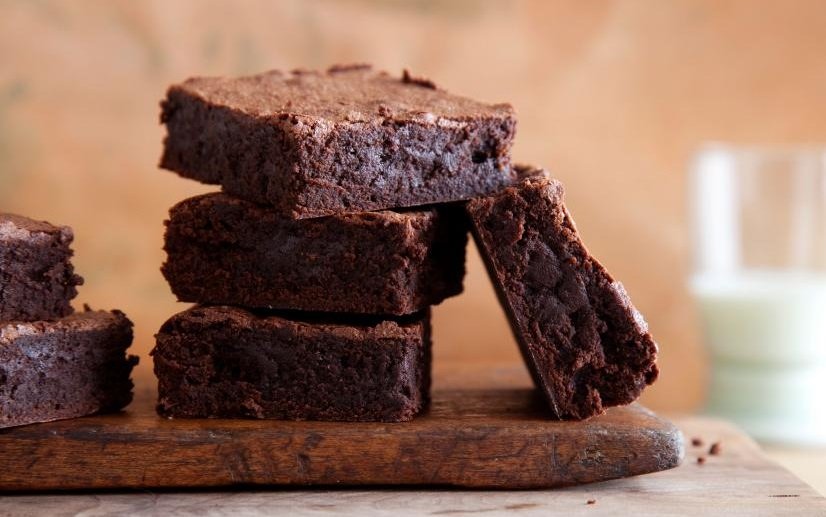
    “I am the first to turn to chocolate rather than to an apple,” Mercier admitted. “And that is what risks being our undoing.”

    Dietician Jennifer Aubert said that by doing little or none of the physical activity we normally do, an adult is likely to burn off up to 400 fewer calories a day.

    Which is why we have to reduce our portions and move as much as we can — as long as it is not to the fridge and back.

    Other experts point to people who have panic-bought a cupboard full of fresh food, finding themselves duty-bound to eat their way through it.

    Being alone and coping with the stress of the situation, as well as worries about whether they will have a job to go back to, can tip people into over-eating, the British Nutrition Foundation warned.

    “With concerns about the availability of food, eating well and staying healthy alongside all the other stresses of the coronavirus outbreak is a challenge,” it admitted.

    “Food can be a comfort and it’s easy to overeat when spending so much time at home, especially if you like to cook in order to pass the time.”

    But it is advising people to embrace the lockdown to learn to “put together healthy meals” which “can be a source of enjoyment and help your well-being”.

    Not everyone cooks, however, as Pascale Hebel, of the French CREDOC research institute said, and some may not have the wherewithal to cook.

    Others warned against using food as a way of soothing children forbidden from going outside to play with their friends.

    “To avoid problems it is easy to make spaghetti bolognese that everyone likes rather than to fight to make them eat spinach,” Mercier said. But that would be a mistake.

    Experts were unanimous that cooking for yourself and structuring your day with regular meals and physical activity, were vital if we are to come out of this in decent shape.

    It can even be possible to lose weight, said Aubert, because “we actually have more time to do sport at home”.

    And with hashtags like #homemadefood proliferating on social media as users show off dishes and compare recipes, it could also be the chance to teach a whole new generation how to cook.

    British celebrity chef Jamie Oliver certainly thinks so and has been doing his bit with a nightly show based on “store cupboard and freezer faves” called “Keep Cooking And Carry On”.

    It includes dishes fast but healthy dishes such as “Cornershop Curry” and “Quick green pasta”.

    “I understand that it is easy to fall into watching the television, or lying around reading and snacking. I am the first to do it,” his French opposite number Cyril Lignac told AFP.

    “But this period is a great chance to teach children and teenagers how to cook simple dishes. And when I am at home I tend to cook with less fat and sugar.”

  • 80’s classic ‘Tanhaiyan’ is coming back to PTV

    80’s classic ‘Tanhaiyan’ is coming back to PTV

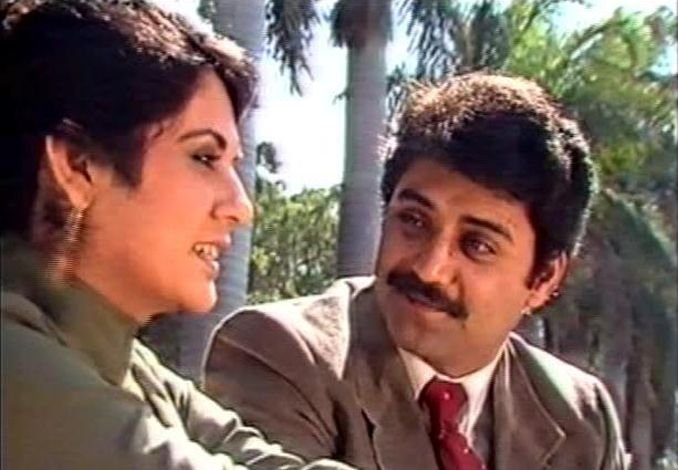
    Pakistan Television (PTV) is revisiting its golden memories with re-runs of PTV classics like Tanhaiyan. The state network has started ‘PTV Gold‘ on which old classics will be aired.

    PTV will be airing Tanhiayan, every Sunday from April 5 at 3 pm. They will also be airing repeats of past episodes at 11 am on Sundays.

    The story of the drama revolves around two sisters who lose their parents and go to live with their aunt. One of their efforts to buy back their parents’ house leads them to realise what makes a house a home.

    It was directed by Shahzad Khalil and written by Hasina Moin. Some of the very legendary actors like Marina Khan, Shehnaz Sheikh, Aasif Raza Mir, Behroz Sabzwari and Badar Khalil were among the cast of the project.

    Fans are already excited about it.

    Some even wanted to see it on Netflix.

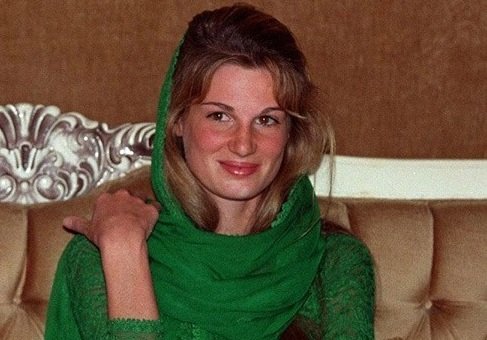
  • Jemima Khan sends love and salaams to Pakistan

    Jemima Khan sends love and salaams to Pakistan

    If there is one person Pakistanis unanimously and wholeheartedly love, it’s Jemima Khan, former wife of Prime Minister Imran Khan.

    Amid the coronavirus crisis which has shaken the entire world, Jemima sent “love and salaams” to Pakistan in a Twitter message.

    Pakistanis were quick to send their love back to her.

    https://twitter.com/SheemaMehkar/status/1246158785380524033?s=20

    Some people couldn’t resist from giving her updates about PM Khan and his efforts.

    https://twitter.com/RamlahSeraj/status/1246141968096387076?s=20

    With more than one million cases of coronavirus across the world, which is currently under lockdown, the situation appears to be dire. The UK is one of the worst-hit countries with 38,168 cases and 3,605 deaths. British PM Boris Johson and Prince Charles were also tested positive for the virus.

    Meanwhile Pakistan has reported 2708 cases and 40 deaths.

  • ‘Corona cake’ in Gaza is keeping spirits up

    Palestinian baker Eyad Abu Rezqa cooked up an idea and created a ‘Corona Cake’ which is spreading fast in Gaza.

    The head of the Al-Nada bakery in Khan Yunis in southern Gaza has made a ‘corona cake’ showing a woman wearing a blue face mask, aiming to remind people of the importance of social distancing.

    As per reports, he first shared the design on social media and now a lot of people are ordering them each day in the impoverished Palestinian enclave.

    “Straight away it got great interest, customers starting saying ‘I want that cake’,” Abu Rezqa told AFP.

    “Every day our clients’ demand for the mask cake is increasing.”

    He stressed he was not depreciating the risk of the deadly disease which has killed more than 50,000 people but trying to keep spirits up while promoting awareness.

    The staff making the cakes are wearing protective clothing, Abu Rezqa pointed out.

    According to health authorities in the Hamas-run strip., Gaza has 12 confirmed cases of COVID-19 so far and all of them are in isolation.

    Like much of the world, authorities have urged to practice social distancing to try to prevent the spread but have not yet closed non-essential businesses.

  • Did PM Imran just give the corrupt a chance to whiten their black money?

    Did PM Imran just give the corrupt a chance to whiten their black money?

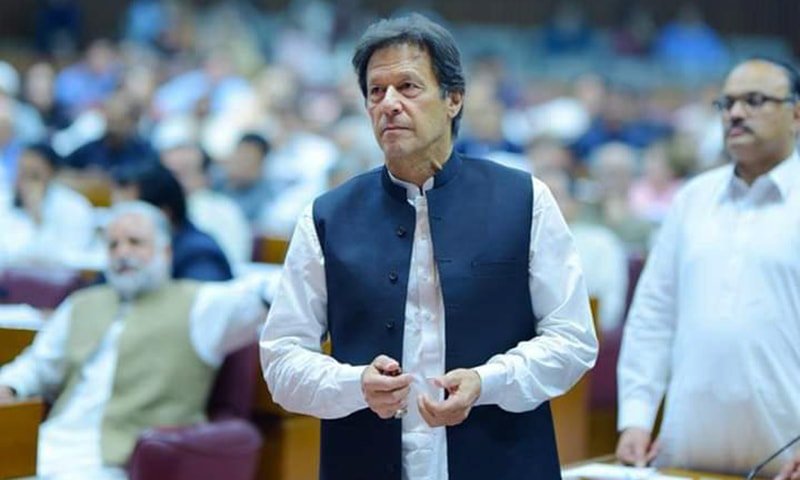
    With Prime Minister (PM) Imran Khan offering amnesty for the construction sector, netizens are expressing their “disappointment” at what they say is the premier “flip-flopping on his ideals to hold the corrupt accountable”.

    PM Imran on Friday gave the status of industry to the construction sector, as he announced opening of the sector along with a package of incentives to boost it with a view to keeping the wheels of economy moving and mitigate the impact of the lockdown on people.

    Speaking to reporters after a meeting of the National Command Centre, the PM said the government provided these exemptions to provide employment to the labourers so that they can be saved from “hunger and the coming difficult circumstances”.

    In line with the relief package, the government will not ask construction entities about their source of income for this year as well as approval of a fixed tax regime for the sector.

    The PM said: “This [move] will bring down the amount of tax to be paid. Also, if the investment is for the Naya Pakistan Housing Scheme, we will exempt 90% of the tax on it.”

    He announced an Rs30bn subsidy for the Naya Pakistan Housing Scheme, saying that on the one hand, it will regulate economic activity and on the other, ensure houses for the poor were also built.

    He also said that withholding tax on materials and services had been abolished in the informal sector. “Tax will be collected only on steel and cement, mainly because these are the formal sectors.”

    Here’s what Twitterati have to say in this regard:

    Meanwhile, some resorted to meme-ing it out:

    What do you think of the incentives announced by the PM? Let The Current know in the comments…

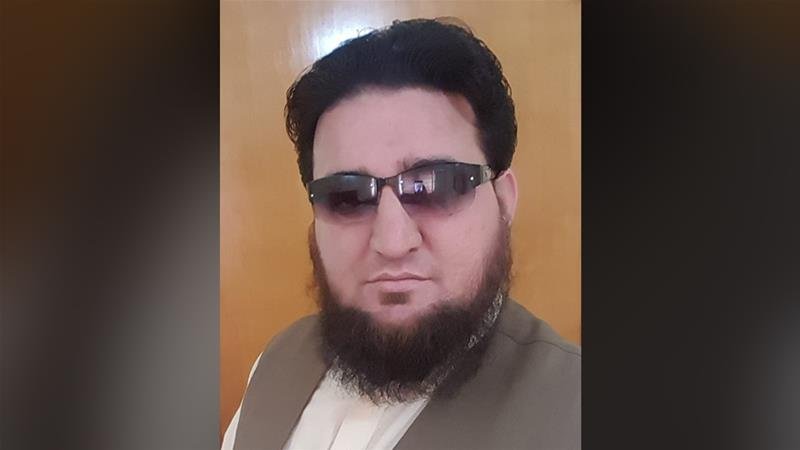
  • Exclusive: Ehsanullah Ehsan speaks out for the first time after escaping from military custody

    Exclusive: Ehsanullah Ehsan speaks out for the first time after escaping from military custody

    “The Pakistani Taliban has suffered from American and Pakistani security operations in recent years, but its cells are still active in Pakistan’s cities and are still capable of carrying out attacks,” he told Al Jazeera in his first interview since escaping from Pakistani military custody in January.

    The groups are active in the eastern provinces of Afghanistan, near the border with Pakistan, said Ehsanullah Ehsan.

    He further added, “We cannot say that the Tehreek-e-Taliban Pakistan, Jamaat-ur-Ahrar or other anti-Pakistan [armed] groups are completely finished. They definitely have a set-up and perhaps they have gone silent as part of a plan. They are present in Pakistani cities and they have the ability to carry out attacks.”

    The interview was conducted from an undisclosed location through voice notes exchanged over an internet-based messaging service.

    As per the report, Pakistan’s military is provided with a detailed list of the allegations made by Ehsan in this interview, but they offered no comment. The Pakistani interior ministry did not respond to a request for comment.