Tag: Pakistan

  • IHC summons Toshakhana case records for PTI Chairman’s Trial

    IHC summons Toshakhana case records for PTI Chairman’s Trial

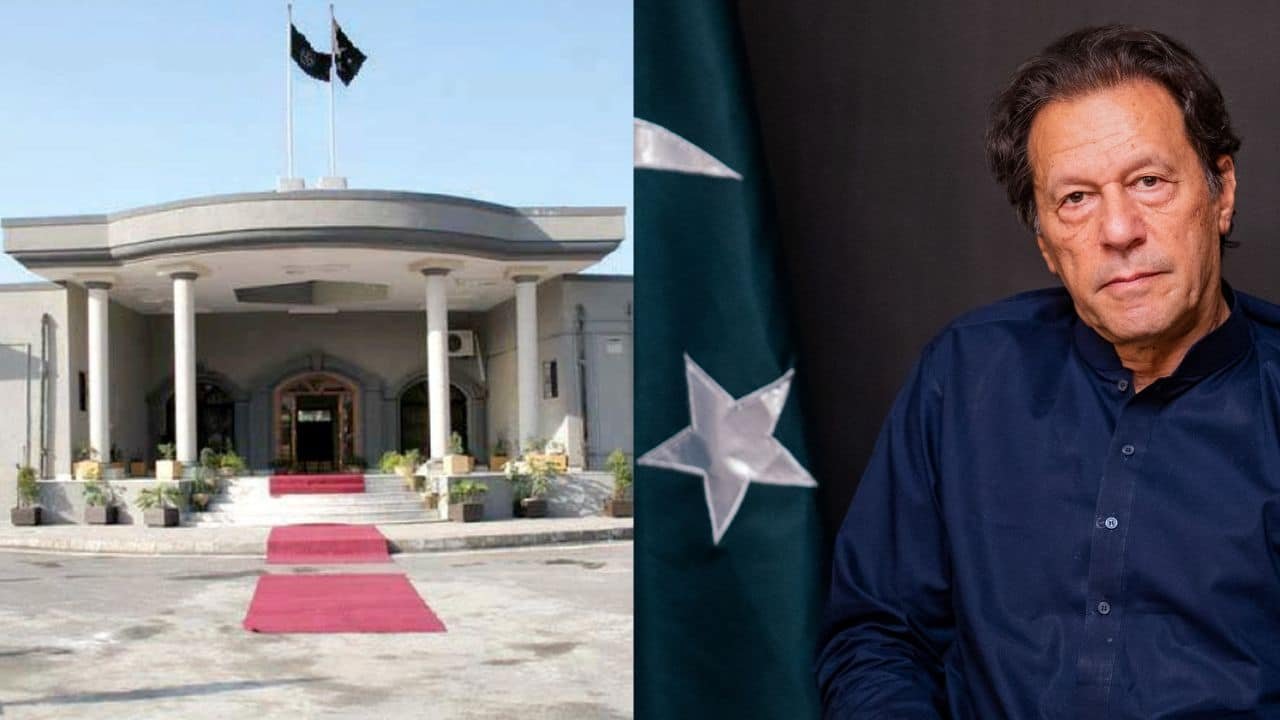
    The Islamabad High Court (IHC) has taken steps to obtain the records of the Toshakhana case involving the imprisoned Pakistan Tehreek-e-Insaf (PTI) chairman, Imran Khan, who is currently serving time in Attock Jail.

    The division bench of the IHC, comprising Chief Justice Aamer Farooq and Justice Tariq Mehmood Jahangiri, issued the directive in response to Imran’s appeal against his conviction in the Toshakhana case.

    In an official statement released today, the IHC has issued an order to the district election commissioner of Islamabad which states, “Notice to the respondent. Office is directed to requisition the record of the learned Trial Court.”

    On August 5, a District and Sessions Court gave a three-year prison sentence to the PTI chairman as part of the Toshakhana criminal case.

    The court also imposed a fine of Rs 100,000 on Imran Khan. Additionally, the former prime minister was prohibited from holding any public office for a duration of five years.

    The court’s verdict emphasized that the former prime minister had knowingly provided false information regarding Toshakhana gifts to the ECP and was found guilty of engaging in corrupt practices.

    Subsequently, he was arrested from his residence in Zaman Park, Lahore, and transferred to Attock Jail.

  • Anwaar-ul-Haq Kakar is the caretaker Prime Minister of Pakistan

    The suspense is over. Anwaar-ul-Haq Kakar, who belongs to Balochistan Awami Party, has been made caretaker Prime Minister of Pakistan.

    Anwaar ul Haq Kakar, elected to the Pakistani Senate from Balochistan in March 2018, previously worked as the advisor to Chief Minister of Balochistan’s information department from January to March 2018 and as the government of Balochistan’s spokesperson from December 2015 to January 2018.
    He has often spoken about on academic and policy-making platforms as an avid book reader and ardent thinker with an understanding of the problems faced by Pakistan’s restive Baloch province.

    Senator Kakar holds a hopeful vision for a powerful Balochistan, committed to the Pakistani nation.

    He graduated from the National Defence University in Islamabad with a bachelor’s degree in political science and sociology. English, Urdu, Persian, Pushto, Balochi, and Brahvi are all spoken by him with ease.

  • Chronology of Events Leading to No-Confidence Motion Vote

    Chronology of Events Leading to No-Confidence Motion Vote

    Despite the PTI-led government’s efforts to make the no-confidence motion against Imran Khan unsuccessful, the vote occurred on April 10, aligning with the Supreme Court’s orders.

    However, the voting on the motion wasn’t a sudden decision made shortly after an opposition leader’s move. It comprised months of extensive planning to set the motion against the Prime Minister into reality.

    By the end of 2021 — PPP begins convincing PML-N leader Nawaz Sharif to initiate a vote of no confidence against PM Imran Khan.

    November 28, 2021 — PPP’s Khursheed Shah hints at a possible internal shift within the Parliament, stating that the opposition would possess sufficient numerical strength to remove Imran Khan from office.

    December 24, 2021 — Ayaz Sadiq, a leader of PML-N, also endorses that the opposition is inpreparations for an internal shift in power.

    January 11, 2022 — Khawaja Asif, a leader of PML-N, maintains that the government had lost its majority, indicating that a change within the legislature was about to happen.

    January 18, 2022 — PPP chairman Bilawal Bhutto-Zardari states that a vote of no confidence against the senate chairman wouldn’t result in the power shift. He emphasizes that the opposition intends to bring change in leadership at the highest level by aiming to remove the Prime Minister from his office.

    January 21, 2022 — Ayaz Sadiq remarks that the opposition is prepared for a vote of no confidence against the PM, and the timing of this action will be determined at a later stage.

    February 7, 2022 — PML-N and PPP formally consult on a motion of no-confidence against the Prime Minister. PML-N president Shahbaz Sharif assures the party’s readiness for this step under the guidance of Nawaz Sharif. Subsequently, both parties initiate communication with other opposition groups and government allies.

    February 8, 2022 — Shahbaz Sharif introduces the idea of a vote of no confidence against the Prime Minister to MQM-P; Amir Khan, leader of MQM-P, declares to present the proposal to the party’s committee for further discussion.

    February 11, 2022 — Maulana Fazlur Rehman, the chief of the Pakistan Democratic Movement (PDM), speaking on behalf of the opposition, declares the intention to initiate a vote of no confidence against the Prime Minister.

    In the middle of these developments, the government remained dismissive of the risk and openly challenged the opposition to formally present the no-confidence motion.

    February 14, 2022 — Foreign Minister Shah Mahmood Qureshi shares the intention of the government to counter the no-confidence motion through political means, emphasizing the impartiality of the process as the “umpire” is also neutral.

    February 18, 2022 — PMLQ leader Pervaiz Elahi, who was the Speaker of the Punjab Assembly at the time, and MQM-P leader Amir Khan meet to jointly announce their decision to remain aligned with the government and not withdraw their support.

    February 22, 2022 — Interior Minister Sheikh Rasheed challenges the opposition, daring them to gather the support of 172 Members of the National Assembly (MNAs) in their ranks.

    February 23, 2022 (When the Prime Minister departed for his visit to Russia) — Defense Minister Pervez Khattak expresses confidence that the supposed no-confidence motion would not be presented, stating that it was a challenging task to have PTI MNAs in favor of it.

    Assessing the statements, one can conclude that the government did not take the no-confidence motion with a substantial level of seriousness.

    March 8, 2022 — The opposition tables a no-confidence motion against Prime Minister Imran Khan.

    March 9, 2022 — Prime Minister Imran Khan remarks that PPP co-chairman Asif Ali Zardari is hin “gun’s crosshairs”, expressing eagerness for the opposition to bring forth a no-confidence motion against him.

    March 10, 2022 — Bilawal responds to PM Imran Khan’s warning towards Zardari, describing it as “intolerable” and warning the Prime Minister to prepare for the potential repercussions.

    March 10, 2022 — Information Minister Fawad Chaudhry states that the armed forces are aligned with the government.

    March 10, 2022 — Islamabad police starts an operation in Parliament Lodges, resulting in the arrest of over a dozen Ansar-ul-Islam workers and two Members of the National Assembly (MNAs).

    March 11, 2022 — After the release of JUI-F workers and leaders, the party’s leader Fazlur Rehman cancels nationwide protests.

    March 11, 2022 — Sheikh Rasheed announces that the security of Parliament House and Parliament Lodges will be under paramilitary Rangers and Frontier Corps (FC) on the day of the National Assembly vote regarding the no-confidence motion.

    March 11, 2022 — Prime Minister Imran Khan verbally attacks three prominent opposition figures – Fazl, Zardari, and Shahbaz.

    March 12, 2022 — Nawaz Sharif and aggrieved PTI leader Aleem Khan discuss the no-confidence motion in London.

    March 12, 2022 — Sheikh Rasheed and PML-Q leader Moonis Elahi get into verbal exchanges, highlighting growing tensions within the government’s coalition as signs of division become apparent.

    March 13, 2022 — Key ally MQM-P states that they are considering all possible “options” regarding the no-confidence motion.

    March 14, 2022 — PPP and MQM-P reach an agreement to collaborate and work together for the country’s “greater interest.”

    March 15, 2022 — PM Imran Khan declares that the nation is willing to face challenges alongside him instead of endorsing what he referred to as the “three stooges,” indicating someopposition leaders.

    March 16, 2022 — Speaker of the Punjab Assembly, Pervaiz Elahi, asserts that 10-12 lawmakers from the government are under the “safe custody” of the opposition.

    March 18, 2022 — It comes to light that approximately 24 members of the PTI were residing at the Sindh House. The PTI declares it will issue show-cause notices to the dissenting MPs. In response, PTI supporters engaged in violent behavior, forcefully entering Sindh House premises.

    March 21, 2022 — The government submits a reference to the Supreme Court seeking clarification on the interpretation of Article 63(A).

    March 27, 2022 — PM Imran Khan alleges that the opposition’s motion of no-confidence is part of a “foreign-funded conspiracy” designed to remove him from power. These claims were made at a PTI-organized rally in Islamabad.

    March 28, 2022 — The leader of the Opposition in the National Assembly, Shahbaz Sharif, officially tables a no-confidence resolution against PM Imran Khan.

    March 28, 2022 — PTI secures assurance of support from PML-Q as Usman Buzdar steps down, making way for Pervaiz Elahi to be the new chief minister. Meanwhile, the government’s ally BAP sides with the opposition.

    March 28, 2022 — Independent Member of the National Assembly (MNA) from Balochistan, Mohammad Aslam Bhootani, resigns from the ruling coalition and aligns with the opposition.

    March 30, 2022 — PTI’s majority in the National Assembly significantly reduces as MQM-P announces its decision to discontinue its alliance with the government.

    March 31, 2022 — The National Assembly session scheduled for the no-confidence motion against PM Imran Khan postpones till April 3rd.

    March 31, 2022 — PM Imran Khan mentions the US as the sender of a “threatening letter” during a speech to the nation, which he later clarifies as “a slip of the tongue.”

    April 1, 2022 — Both the State Department and the White House jointly reject PM Imran Khan’s allegations.

    April 2, 2022 — On the eve of the no-confidence motion, PM Imran Khan appeals to the youth to demonstrate against what he considers as a “foreign conspiracy.”

    April 3, 2022 — NA Deputy Speaker Qasim Suri dismisses the no-confidence motion, statingit to be “unconstitutional,” and concludes the proceedings. President Arif Alvi dissolves the National Assembly based on PM Imran Khan’s orders. The Supreme Court initiates suo motu notice of the political situation. PM Imran Khan attributes the “threat letter” to US Assistant Secretary of State for South and Central Asian Affairs Donald Lu.

    April 7, 2022 — The Supreme Court reinstates the National Assembly, ruling that the government’s dissolution of the assembly and Qasim Suri’s decision were unconstitutional. The court directs NA Speaker Asad Qaiser to convene a session of the assembly on Saturday.

    April 8, 2022 — Just a day before the scheduled vote on the no-confidence motion, the Prime Minister states that he wouldn’t tolerate the establishment of a “foreign government” and would seek public support if any such thing happens.

    April 9-10, 2022 — PTI’s elected speaker, Asad Qaiser, convenes the session for the vote on the no-confidence motion at 10:30 am. PTI attempts to hinder the vote proceedings throughout the session. However, moments before midnight, Qaiser resigns from his position and passes the speaker’s seat to Ayaz Sadiq, who then presides over the session for the no-confidence motion. Following Sadiq’s assumption of the speaker’s role, 174 members of the opposition cast their votes in favor of the motion, resulting in the removal of Imran Khan from the position of Prime Minister.
  • Shehbaz, Arif Alvi lock horns on caretaker PM appointment

    Shehbaz, Arif Alvi lock horns on caretaker PM appointment

    President Arif Alvi wrote a letter on Friday to outgoing Prime Minister Shehbaz Sharif to appoint a caretaker Premier by Saturday (today), rekindling the uneasy relationship between the two.

    Dawn has reported that PM Shehbaz is not happy with the letter, questioning why President Alvi is in a hurry. He also said that the President might not have read the constitution.

    According to Dawn’s sources, delay in nominating caretaker PM can be chalked up to opposition leader Raja Riaz, who is insisting that his candidate be appointed caretaker PM instead of agreeing to the names suggested by Pakistan Muslim League-Nawaz (PML-N).

    After a meeting was held between Prime Minister Shehbaz Sharif and opposition leader Raja Riaz on Saturday to discuss the name of the upcoming caretaker prime minister, Riaz gave three names for caretaker Prime Minister to Sharif. The Premier consulted with his allies last night about the three names.

    One of these three names is Sadiq Sanjrani, but so far the other two names are not known.

    On the other hand, PML-N head Nawaz Sharif wants former finance minister Ishaq Dar or former Prime Minister Shahid Khaqan Abassi as caretaker PM.
    However, insiders alleged that Mr. Riaz was taking orders from another power corridor and insisted on the name of Senate Chairman Sadiq Sanjrani. On Friday, Mr. Sanjrani called Mr. Riaz as well as Mr. Dar and Ahsan Iqbal.

  • IMF delegation to evaluate Pakistan’s economic performance during November visit

    IMF delegation to evaluate Pakistan’s economic performance during November visit

    The International Monetary Fund (IMF) is gearing up for a vital visit to Pakistan, scheduled for November. The purpose of this visit is to assess Pakistan’s economic performance, particularly focusing on the period from July to September.

    Reliable sources in financial circles have shared that this visit is part of an ongoing review following the extension of the loan programme. Representatives from the IMF and the caretaker administration will engage in important discussions to gauge Pakistan’s progress and its adherence to the outlined economic targets.

    Reports from ARY News indicate that Pakistan is on track to receive the next portion of financial assistance, which amounts to $700 million from the $3 billion loan programme. This development underscores Pakistan’s dedication to meeting the IMF’s conditions aimed at boosting economic stability and growth.

    Forecasts suggest that the IMF is set to disburse around $1.8 billion in funds to Pakistan by March 2024. This positive outlook reflects the gradual restoration of investor confidence and the promising trajectory of Pakistan’s economy.

    However, the release of these funds hinges on Pakistan’s successful completion of two critical economic reviews. This underscores Pakistan’s commitment to implementing structural reforms and achieving sustainable economic development.

  • ‘Governor Raj laga tou shehr band krna hoga’; Sensational revelations from Bushra Bibi’s alleged diary

    ‘Governor Raj laga tou shehr band krna hoga’; Sensational revelations from Bushra Bibi’s alleged diary

    The influence of Bushra Bibi, wife of the former Prime Minister Imran Khan, in her husband’s politics is much speculated on, however no substantial proof has come to light.

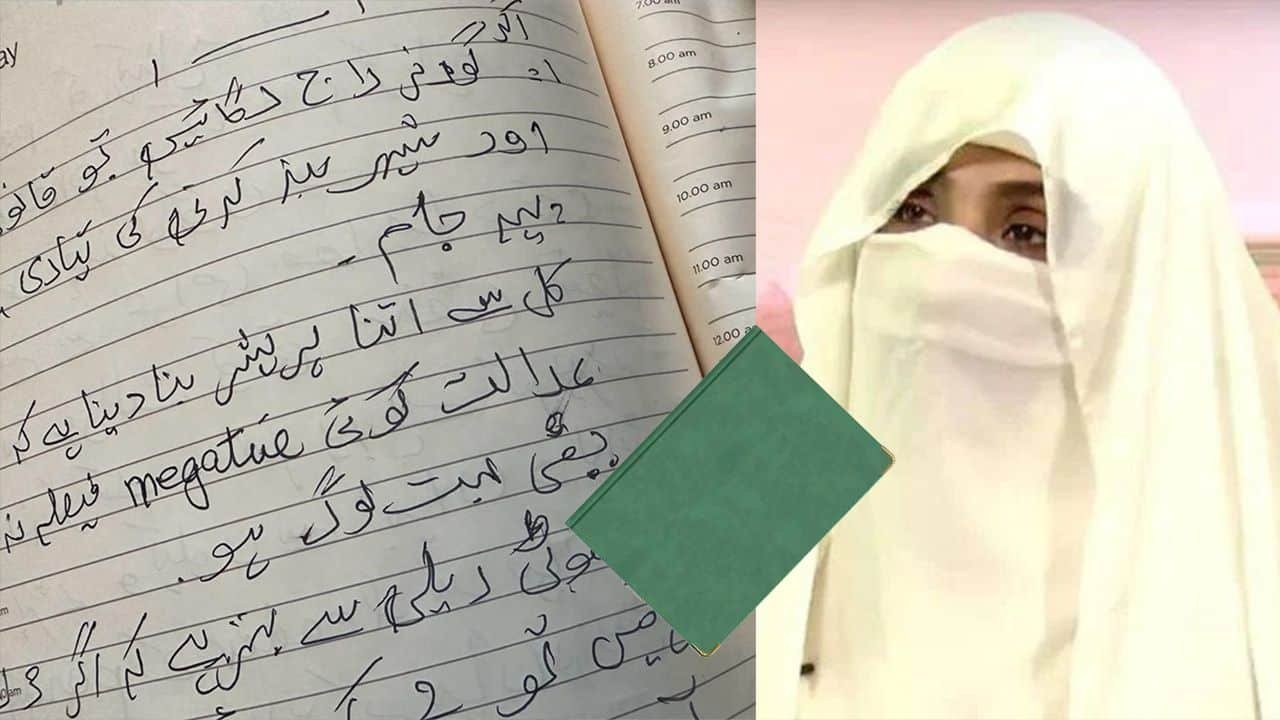
    That all changed on Friday, when a private diary, purportedly written by the former First Lady, turned up in news reports.

    The diary has shocking revelations, including methods of dealing with the administration, military, and judiciary.

    It can be seen clearly from the content of the diary that Bushra Bibi was guiding Chairman Imran Khan in political matters. The matter has generated a debate about the boundaries of spousal involvement in political matters.

    The most shocking finding from the diary is that Bushra Bibi made a plan to mold Imran Khan’s mindset through prayers and persuasive language.

    Furthermore, it appears that Bushra Bibi was involved in formulating PTI’s political strategy based on passages of her diary that were released. According to the diary entries, Bushra Bibi gave instructions to Chairman PTI about how to pray and what phrases to use in order to create an environment that would support PTI’s goals.

    Tactics to put pressure on the military and establishment are mentioned including one sentence that said, “Governer Raj Laga tou Shehr Band Krna Hoga” [If Governor Raj is imposed, cities must be shut down.]

    The diary also calls General Bajwa “Mamu” and suggests ways to put pressure on significant figures and organizations.

  • SC strikes down Review of Judgement law two days after NA dissolution

    SC strikes down Review of Judgement law two days after NA dissolution

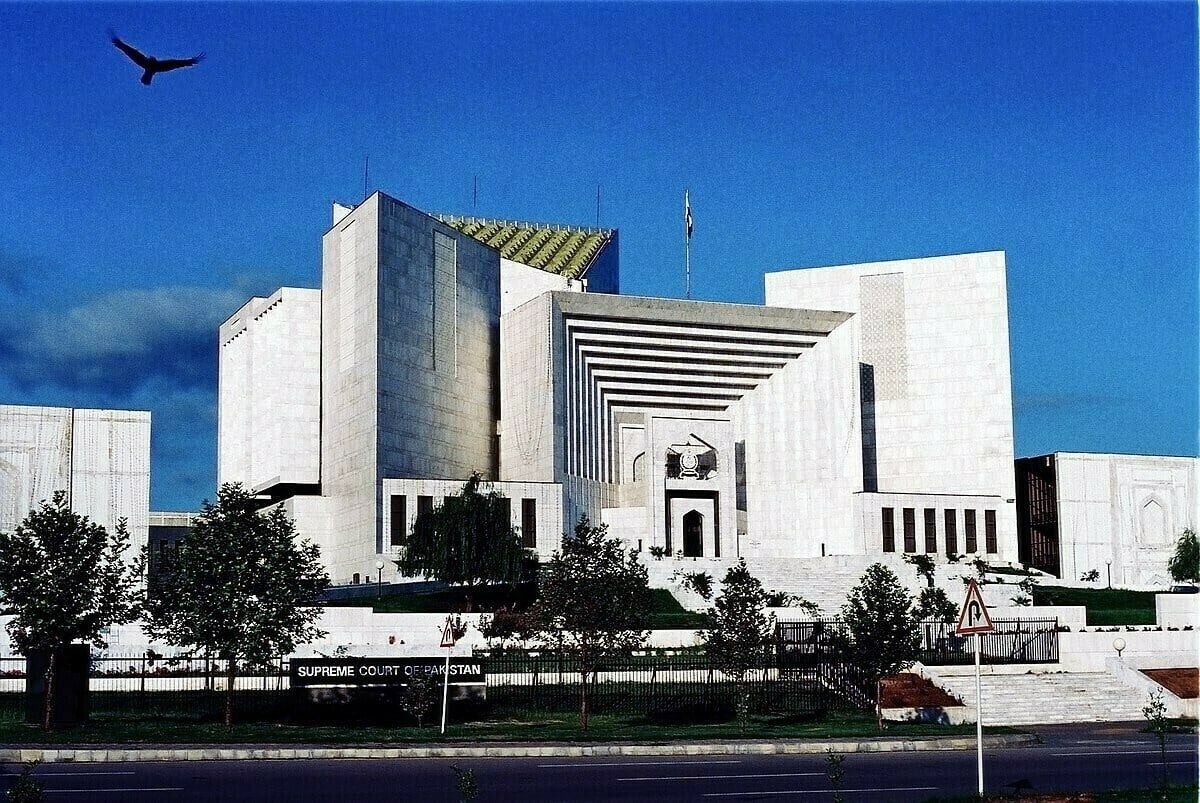
    The Supreme Court (Review of Judgments and Orders) Act 2023 was declared “unconstitutional” by the apex court’s unanimous decision on Friday, just two days after the National Assembly was dissolved.

    The law was interpreted by some legal analysts as a way back into active politics for former Prime Minister Nawaz Sharif and Jahangir Khan Tareen.

    Both Nawaz Sharif and Jahangir Tareen were disqualified under Article 62 of the Constitution. After today’s decision, both politicians can’t challenge their disqualification in the apex court.

    Chief Justice Umar Ata Bandial headed the three-member bench, comprising Justice Ijazul Ahsan and Justice Munib Akhtar. The bench announced the decision today (Friday) after six hearings dating from June 7 to June 19.

    During the hearing of the case, Pakistan’s Attorney General (AGP), Mansoor Usman Awan, requested that the court rejects pleas against the law. On the other hand, Pakistan Tehreek-e-Insaf (PTI) lawyer Ali Zafar, said that changes in the court’s power were not possible only through legislation but also required constitutional amendments.

    The CJP read out the verdict while the AGP and other lawyers were present in court.

    CJP Umar Atta Bandial said that the Supreme Court Review Act is “unconstitutional”. He further added that the detailed order would be issued later.

    The detailed 87-page long order said, “repugnant to and ultra vires the Constitution, being beyond the legislative competence of the Parliament.”

    It is also mentioned in the order that “It is accordingly struck down as null and void and of no legal effect”.

    Hamid Mir has also said that “From the timing of the decesion, it seems that Nawaz Sharif has been targeted”.

  • Another monsoon spell to hit Punjab from Sunday

    As many districts in Punjab deal with intense heat, the Provincial Disaster Management Authority (PDMA) has predicted rainfall in the coming days.

    As stated by the Provincial Disaster Management Authority (PDMA), the weather will remain hot and humid across the majority of Punjab. Nevertheless, the province is anticipated to experience monsoon rains from August 13 to 16.

    Substantial rainfall is forecasted for Sialkot, Narowal, Shakargarh, Lahore, Gujranwala, Gujrat, and Mandi Bahauddin. Additionally, there’s likelihood of rain accompanied by thunderstorms in Rawalpindi, Attock, Jhelum, Chakwal, Murree, and Galliat.

    The PDMA has affirmed that water levels in the Chenab, Ravi, Jhelum, and Sutlej rivers are within normal range, while Taunsa along the Indus River is experiencing minor floods. Tarbela and Mangala dams are currently at 95 percent of their capacity.

    Simultaneously, the Pakistan Meteorological Department (PMD) has predicted hot and humid conditions across most parts of the country in the next 24 hours. However, there’s an expectation of rain, wind, or thundershowers in northeastern Punjab, the Potohar region, Islamabad, upper Khyber Pakhtunkhwa, and Kashmir. In the central and southern parts of the country, there are chances of strong winds capable of raising dust.

  • Pakistan seeks economic stability through multi-billion dollar Gulf investments

    Pakistan seeks economic stability through multi-billion dollar Gulf investments

    Pakistan is engaged in high-stakes negotiations with Gulf nations to secure billions of dollars in investments. These discussions come as Islamabad strives to stabilise its economy by attracting much-needed foreign currency, while the oil-rich Gulf monarchies seek to diversify their economies and extend their influence.

    According to a report by Saeed Shah published on the Wall Street Journal, a significant development on the horizon involves Saudi Arabia’s potential involvement in a massive copper mining project. Canada’s Barrick Gold is spearheading the development of this colossal mine, located in western Pakistan, at an estimated cost of $7 billion. Sources familiar with the project reveal that Saudi officials are in talks about acquiring a stake in this ambitious venture.

    Furthermore, advanced negotiations are underway for the establishment of a Saudi oil refinery within Pakistan’s borders. This ambitious project, estimated to cost up to $14 billion, has garnered the attention of both Islamabad and Gulf officials.

    This marks a notable shift for the Gulf states, moving away from traditional loans and grants to a strategic focus on acquiring assets to bolster their sovereign wealth funds.

    For Pakistan, these investments come at a critical juncture. The nation, home to a population of 240 million and armed with nuclear capabilities, has been grappling with economic turmoil and political instability. In June, an agreement was reached with the International Monetary Fund for another bailout, reflecting the urgency of the situation.

    To pave the way for these investments, Pakistan’s military, a dominant institution within the country, is taking measures to streamline the deal-making process. This initiative aims to address previous concerns raised by Gulf investors regarding bureaucratic hurdles and political uncertainties.

    The potential investments span a wide range of sectors, including mining, energy infrastructure, farmland, and the privatisation of government businesses. Notably, Pakistan’s newly established Special Investment Facilitation Council, which includes the army chief, has been designed to expedite the bureaucratic procedures associated with Gulf investment.

    Ahsan Iqbal, Pakistan’s outgoing planning minister and head of the executive committee of the Special Investment Facilitation Council, emphasised the strategic positioning of Pakistan as a gateway to growth in Asia. He stressed the importance of providing investors with the assurance of policy continuity for their investments.

    The Saudi deputy mining and foreign ministers have recently visited Islamabad to discuss this significant investment endeavour. These discussions align with Pakistan Prime Minister Shehbaz Sharif’s announcement that parliament will dissolve, potentially paving the way for a nonpolitical caretaker government and facilitating economic decisions.

    Pakistan’s relationship with its military is pivotal, with the army wielding considerable influence in the country. The Gulf has maintained direct ties with Pakistan’s military for decades, underscoring the military’s role as a key facilitator in these negotiations.

    The scope of the potential deals is substantial, with Pakistan hoping to secure around $25 billion in investments. Key areas of interest include solar energy, information technology, and the defence industry. Furthermore, Pakistan is prepared to offer uncultivated government land on long leases for agriculture, aiming to attract diverse investments.

    While concrete figures from the Gulf nations have yet to be disclosed, the prospect of significant investments has generated substantial interest. In this context, the ongoing economic challenges faced by Egypt and Pakistan have presented an opportunity for asset acquisition on favourable terms.

    Efforts to secure investments will likely see competition between Gulf nations, particularly Saudi Arabia and the United Arab Emirates (U.A.E.). Both nations have expressed keen interest in various sectors, including infrastructure and logistics.

    Amidst these negotiations, Islamabad has announced a tender for terminal services at Islamabad airport, a contract that is expected to draw interest from both the U.A.E. and Qatar. Pakistan’s transition to a nonpolitical caretaker government is anticipated to catalyse these investment deals.

    At the heart of the negotiations lies the prospect of a Saudi oil refinery, a deal that is reportedly on the cusp of realisation. The potential partnership with Saudi Aramco for this project underscores Pakistan’s strategic significance in the region.

    The mining sector also offers a lucrative opportunity, particularly in copper, a critical resource for the transition to cleaner energy. The joint venture between Barrick Gold and the Pakistani government in the Reko Diq mine has attracted Saudi interest, with the Saudi sovereign wealth fund, the Public Investment Fund, and Saudi mining company Ma’aden reportedly eyeing a stake in the mine.

    While challenges and security concerns persist, these negotiations mark a pivotal moment for Pakistan. With the potential for substantial investments across various sectors, the country seeks to harness its untapped potential and forge strategic partnerships in the Gulf region.

  • Mountaineers in pursuit of records accused by climbers of ignoring dying Pakistani sherpa on K2

    Mohammad Hassan, a 27-year-old Pakistani porter, lay severely injured just 1,300 feet from K2’s summit, a peak known for its unforgiving nature. Shockingly, as he battled for survival, fellow climbers allegedly chose to prioritize their ascent records over extending a helping hand. Drone footage captured at the grim scene reveals climbers navigating around Hassan on the precarious ledge, effectively leaving him to his fate.

    The incident has ignited controversy, centering on Norwegian climber Kristin Harila and her team, who were captured passing by the injured porter. Accusations have been leveled against them, claiming that their pursuit of a new world record took precedence over providing aid to Hassan. Adding to the outrage, reports said that a celebratory party followed shortly after the team achieved the record of conquering 14 of the world’s highest peaks in just over three months—despite the tragic loss of Hassan’s life, Daily Mail has reported.

    Kristin Harila has defended her actions, stating that she and her team attempted to assist Hassan. However, the treacherous conditions on K2 made any rescue attempts perilous.

    Austrian mountaineer Philip Flämig, who was climbing alongside Wilhelm Steindl, has drawn attention to footage captured by their drone. The footage allegedly depicts a grim sequence of climbers stepping over the stricken body of Mohammad Hassan rather than offering assistance.

    Flämig described the scene in Austria’s Standard newspaper, highlighting the heart-wrenching footage. He expressed dismay, pointing out that while one person tended to Hassan, others surged onward toward the summit. Flämig criticized the absence of an organized rescue operation despite the presence of Sherpas and guides who could have acted.

    Flämig denounced the incident as a “disgrace” and compared the stark contrast to practices in the Alps, highlighting the ongoing debate regarding the treatment of Sherpas in the Himalayas. He asserted that if Hassan were a Westerner, immediate rescue efforts would likely have been deployed. The tragedy, he lamented, highlighted the callous disregard for human life in favor of record-breaking pursuits.

    In response to these claims, Harila defended her actions and decisions, countering accusations of inaction. She refuted the notion that no effort was made to help Hassan, stating that her team attempted to lift him for over an hour. She also explained the hazardous conditions on the mountain, particularly on the treacherous part where Hassan fell.

    Drone footage of the incident revealed individuals climbing over Hassan as he lay helpless in the deep snow. The video offered a glimpse of the thin air at such high elevations, as climbers wore oxygen masks to combat the thin atmosphere.

    Despite differing accounts of the incident, the unsettling scene has prompted renewed debate about the ethics of mountaineering and the value of human life in extreme circumstances. Steindl, who had to retreat to base camp due to perilous conditions, expressed his disgust at fellow climbers’ inaction, stressing the importance of lending aid.