Tag: Pakistan

  • TW: Policeman sets his 14-year-old wife on fire over dowry

    TW: Policeman sets his 14-year-old wife on fire over dowry

    TRIGGER WARNING: abuse, domestic violence

    A 14-year-old girl married to a policeman in Sialkot has been set on fire after her husband became unhappy with the dowry provided to him.

    According to the complaint filed with the Sialkot police by labourer Tariq Mahmood, his daughter Muneeb Fatima, was married to Constable Waqas Nazir, who was posted at the Satrah Police Station, of Pasrur Tehsil. The marriage took place five months ago, however , when he went to visit their home, he was told by his daughter’s in-laws that she was happy and did not want to meet him.

    Speaking to DAWN, Mahmood elaborated that when Fatima came back to visit him after five months, she revealed details of torture, including being burnt by a clothing iron and being kept in chains.

    Mahmood further reported that his daughter was set on fire by her husband after he sprinkled petrol on her. When the labourer confronted Waqas, he was shot at and given death threats.

    Mahmood said his daughter was tortured by both her husband and his sister, Sadaf.

    Muneeb Fatima is receiving treatment at Tehsil Headquaters Hospital, Pasrur.

    The abuser, according to Dawn, made calls to a journalist and threatened to have him killed. The police, under the orders of the DPO, made several threatening calls to the journalist.

    According to the a spokesperson for the Sialkot district police, Waqas Nazir has been suspended by the DPO, while an inquiry has been launched against him.

  • ECP awaits census data to determine election schedule

    ECP awaits census data to determine election schedule

    Following the dissolution of the National Assembly, the Election Commission of Pakistan (ECP) has been granted a 90-day window to organize general elections. Within this period, the ECP is also required to carry out the process of constituency delimitation based on the digital census. However, census results necessary for this task have not yet been provided to the ECP.

    Sources within the ECP have confirmed to geo.tv that they are still awaiting data for 186,509 census blocs and are yet to establish a timeline for the constitutionally mandated delimitation process. Although they have already received district-wise data from the Pakistan Bureau of Statistics, the data required for delimitation is still pending.

    It has been revealed that the Pakistan Bureau of Statistics (PBS) is expected to compile and share the data of these blocs with the ECP in the coming week. Following this, the ECP will need a minimum of four months to carry out the delimitation process and address any complaints that may arise.

    The Council of Common Interests (CCI), a constitutional body, approved the digital census results on August 5, which marked a significant step. The ECP held its inaugural formal meeting on this matter. With the census phase now complete, the focus shifts to the subsequent step of delimitation.

    While the ECP has already consulted its legal team and received a briefing, the completion of data provision from the bureau is awaited. This data is essential for the ECP to establish a timeline for fulfilling its legal obligations prior to conducting the elections.

    The passage of the census results has sparked speculation, particularly within political and constitutional circles. In relation to the National Assembly, officially dissolved on August 10, triggering the countdown for the constitutional requirement of delimitation. This process encompasses 90 days, with an additional 30 days allocated for addressing related complaints and objections.

    A senior official stressed the significance of time, stating that if the complete census results are provided to the Election Commission by August 15 or 16 (Tuesday or Wednesday), the commission would be left with 85 or 86 days to carry out the delimitation process.

    Originally reported by Mumtaz Alvi

  • Nawaz Sharif is coming to Pakistan next month, Shehbaz confirms

    Nawaz Sharif is coming to Pakistan next month, Shehbaz confirms

    Prime Minister Shehbaz Sharif has said on Thursday that his elder brother, former Prime Minister Nawaz Sharif, will return to Pakistan next month and face the law. It will be a major development if Nawaz Sharif comes back, as the upcoming elections are going to be held very soon.

    Shehbaz Sharif has also said in an interview with Geo News’ Capital Talk that he will visit London and meet the Pakistan Muslim League-Nawaz (PML-N) head after the caretaker government takes charge.

    “Nawaz Sharif will come back to Pakistan next month and will face the law and lead the election campaign,” Shehbaz Sharif said, however, he did not mention a specific date.

    “He [Nawaz] will neither wear a hat nor a bucket”, the outgoing PM said, criticising former Prime Minister Imran Khan, who is arrested and in Attock jail currently.

    Shehbaz Sharif, who is also the PML-N president, expressed hope that his party would win the upcoming general elections and that he would work as a party activist under the leadership of Nawaz Sharif.

  • Suspect arrested for harassing Srha Asghar released on bail due to non-cooperation of complainant

    Suspect arrested for harassing Srha Asghar released on bail due to non-cooperation of complainant

    Update: According to the police, the man who was arrested for harassing actress Srha Asghar has walked free while the FIR against him will be dismissed due to non-cooperation of the complainant.

    Geo News reports that Inspector Javed Babar has said that when the harasser was produced in court on Friday, he denied the allegations. The actress was summoned to appear in court by the female judge, but she didnt arrive, nor was any evidence of the incident produced.

    “Even the clothes torn during the incident or eyewitnesses of the incident requested by the police and the court were not produced,” he said.

    TRIGGER WARNING: discussion of harassment

    In a horrifying case, actress Srha Asghar reportedly filed a First Information Report (FIR) against a man, Asim, when he allegedly tried sexually assaulting her outside her home in Karachi. The FIR was registered at Shah Faisal Police Station on the complaint of Srha’s husband, Umar Murtaza.

    According to Police officials, the incident took place in August when the actress left her house to go to the nearby market to get groceries. A man kept following her back home and cat-called her. Asghar’s statement further revealed the man tried groping her which resulted in her clothes getting torn.

    The actress then rung the doorbell after which her husband came outside, which led to a fight between him and the assaulter. After which, the assaulter was taken to the police station by Umar and their neighbors.

    Srha and her husband have refused to give comments to media, but the actress did post a note on her Instagram stories where she slammed media organisations for including personal information on their news to get ratings, telling them to stop calling her:

    “I want every media person to stop messaging me about the incident, shame on them for calling me and my husband continuously for an interview for your ratings! And shame on the news channel who attached all the personal info with the incident! We ae safe Alhumdulillah!”

  • ‘Mayi Ri’ drama targets child marriage issues

    ‘Mayi Ri’ drama targets child marriage issues

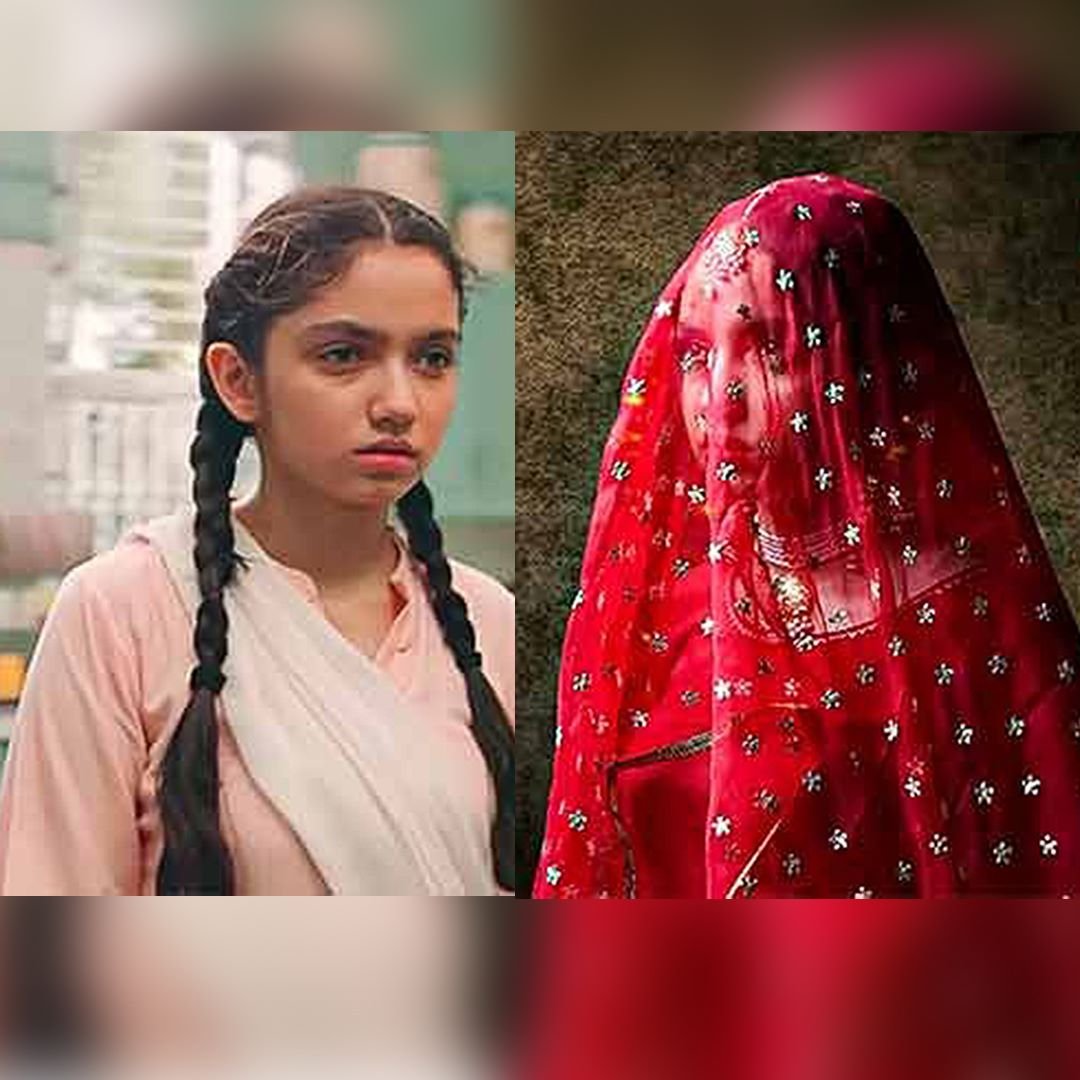
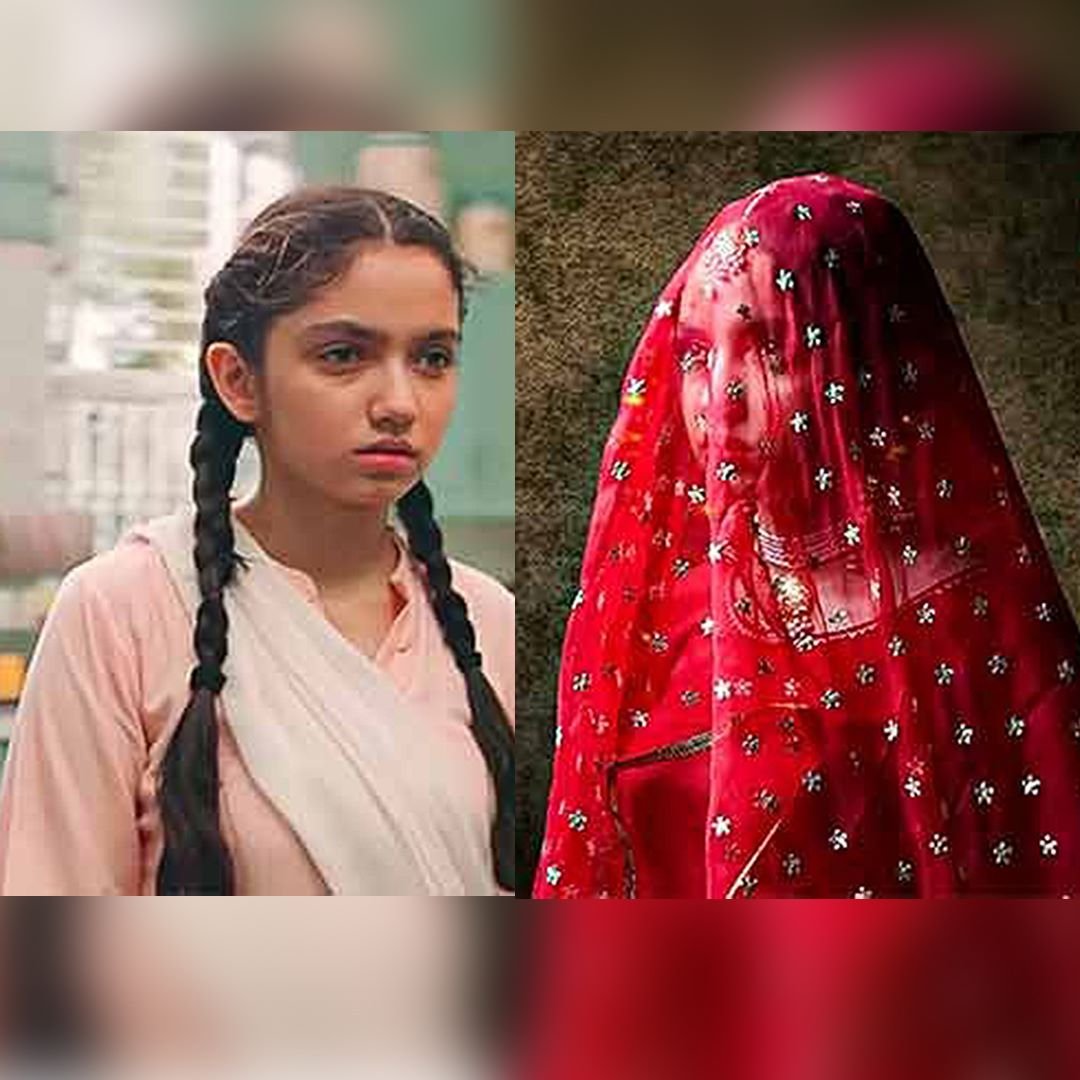
    Mayi Ri looks to be an exceptional project, with a strong female lead in which women empowerment and the importance of education for girls will be highlighted.
    Aina Asif is a talented up-and-coming star who at a young age has already starred in dramas with big storylines.

    We are brilliantly reintroduced to the frightening reality of child marriages in the recently released drama. ‘Mayi Ri’ urges us to consider the terrible effects of this deeply ingrained practice through its striking images and compelling storytelling.

    This drama video bravely illuminates the mental, physical, and psychological hardships faced by kids forced into young adulthood who have to cope with an environment for which they are unprepared.

    The drama aims to question the accepted beliefs about child marriage and highlight the value of empowerment, especially for young girls.
    The Pakistani entertainment sector is a change catalyst because of its wide impact. It has the potential to increase public awareness of and motivate group initiatives to address problems like child marriage. “Mayi Ri” seeks to start a constructive society reform by bringing such issues to light.

    The two actors appearing in the trailer are child actor Aina Asif and Samar Jaffri, a brand-new face in the industry. This will be his debut role. The rest of the cast consists of Nauman Ejaz, Haniya Ahmed, Maria Wasti, Rimha Ahmed, Saad Zameer Faridi, Sajida Syed, Paras Masroor, Amna Malik, Diya Mughal, Usman Mazhar, Faham Usman, Sameena Nazir, and Bisma Babar, among others.

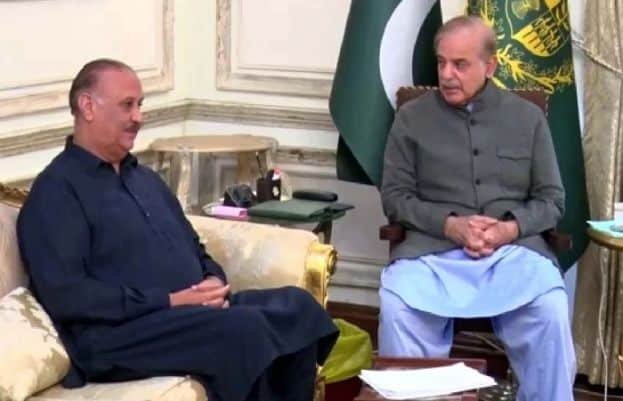
  • Kaun banega caretaker PM? Consultations between Shehbaz and Raja Riaz to begin today

    Kaun banega caretaker PM? Consultations between Shehbaz and Raja Riaz to begin today

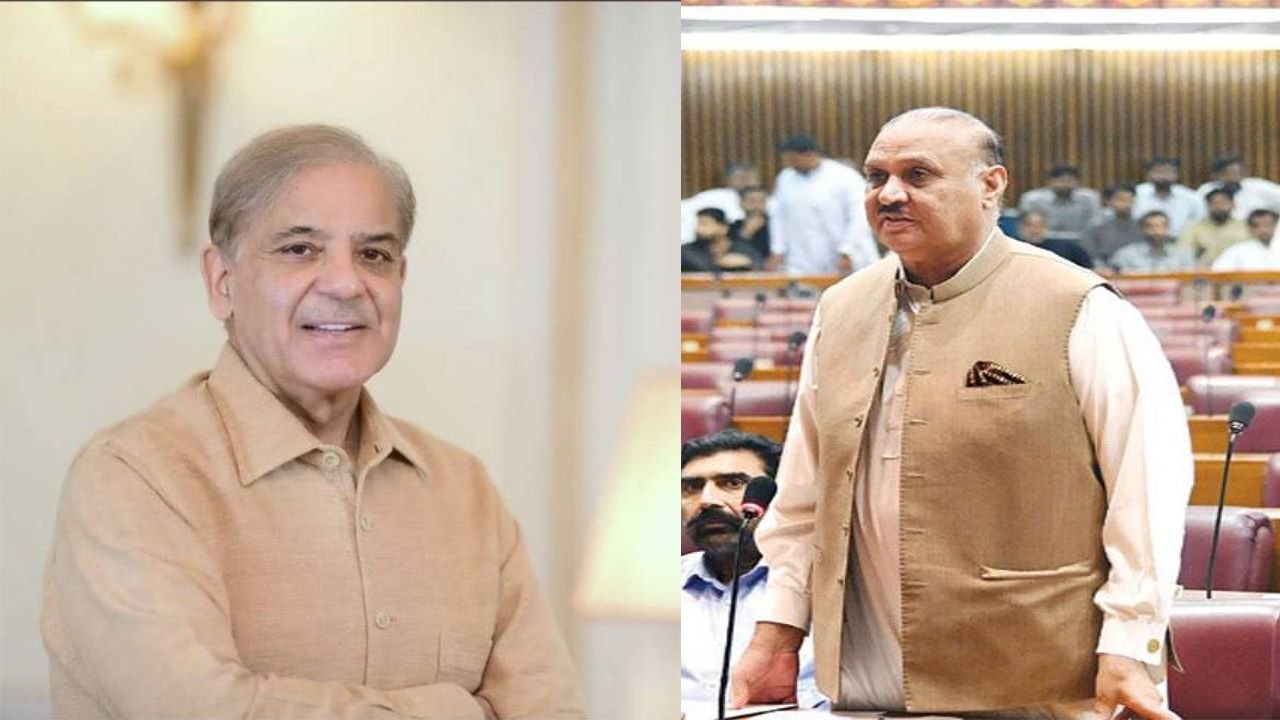
    Consultations between Prime Minister Shehbaz Sharif and Leader of the Opposition Raja Riaz will start today as the country waits for an announcement on who will be the caretaker Prime Minister.

    A meeting between Raja Riaz and Shehbaz Sharif was postponed yesterday due to the dissolution of the National Assembly late last night.

    “The president dissolved the National Assembly on the advice of the prime minister under Article 58-1 of the Constitution,” read an official statement issued by the President’s Office on X, formerly known as Twitter, late Wednesday.

    Shehbaz Sharif has invited Raja Riaz to the meeting by sending a letter, writing that President Arif Alvi has dissolved the National Assembly and that it’s his constitutional responsibility to appoint the caretaker Prime Minister.

    The PM and Raja Riaz will mutually decide on one of the names proposed for the caretaker Premier.

    Earlier on Wednesday, the opposition leader denied rumours that a scheduled meeting had been postponed for nefarious reasons and expressed eagerness for the upcoming conversation with Prime Minister Shehbaz Sharif.

  • ‘Worst assembly’: PML-N’s Shahid Khaqan slams govt

    ‘Worst assembly’: PML-N’s Shahid Khaqan slams govt

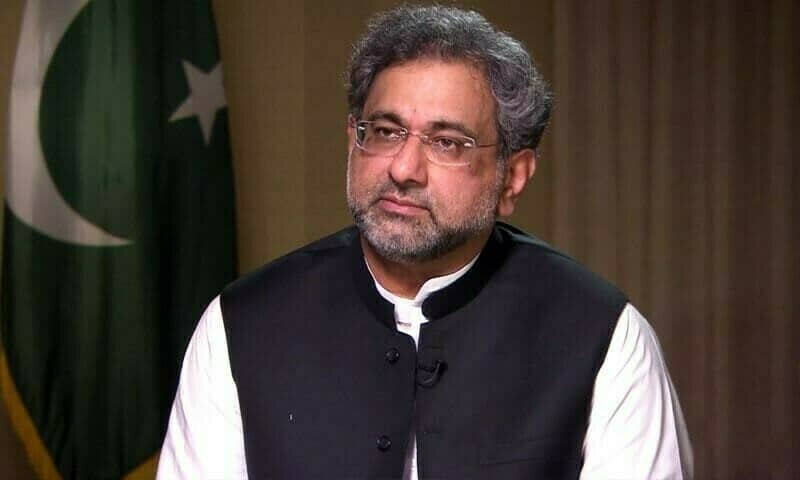
    Former Prime Minister Shahid Khaqan Abbasi has said in his farewell speech on Wednesday that the outgoing National Assembly was the worst because it did not provide relief to the public.

    The former Prime Minister, a stalwart of the ruling Pakistan Muslim League-Nawaz (PML-N), said that not a single legislation was passed by the Lower House in its five years. “You seek record of five years’ legislation and you will see all the government bills were not meant to provide relief to people,” he said, stressing that it was a matter of shame for all.

    He pointed out that the people have lost faith in the government, emphasizing that such matters cannot be fixed by legislation but with actions. He blamed everyone for the economic crisis in the country, adding that it would take at least ten years to fix the economy.

    People say that all members of the assembly are corrupt and we show that they are correct,” Abbasi said, pointing out that parliamentarians were surrounding the Interior Minister to get his signature for licenses.

  • Khan’s alleged cypher is out

    A report carried by The Intercept, a US publication, says that Imran Khan’s cypher which he blamed for his removal from power, did include American official Donald Lu pressurising Pakistan to oust Khan. The Intercept says it has the cypher.

    The conversation took place during a meeting held on March 7, 2022.

    The meeting between the Pakistani ambassador to the United States and two State Department officials has drawn significant attention, controversy, and rumours in Pakistan.

    On August 5, Khan was given a three-year prison sentence in the Tosha Khana case and was arrested for a second time since being ousted. Khan’s supporters deny the accusations as unfounded.

    One month after the meeting with U.S. officials documented in the leaked Pakistani government document, a no-confidence vote was held in Parliament, leading to Khan’s removal from power.

    The text of the Pakistani cable that the ambassador sent to Islamabad following the meeting has not yet been made public. The cable, internally referred to as a “cypher,” promises improved relations if Khan was ousted and isolation if he was not, The Intercept says.

    An unnamed insider in the Pakistani military who claimed to have no connections to Imran Khan or Khan’s party gave The Intercept access to a
    the document.

    Here is the complete text of the cipher as published in The Intercept:

    “I (the former Pakistani Ambassador to the US) had a luncheon meeting today with Assistant Secretary of State for South and Central Asia, Donald Lu. He was accompanied by Deputy Assistant Secretary of State Les Viguerie. DCM, DA and Counsellor Qasim joined me.

    At the outset, Don referred to Pakistan’s position on the Ukraine crisis and said that “people here and in Europe are quite concerned about why Pakistan is taking such an aggressively neutral position (on Ukraine), if such a position is even possible. It does not seem such a neutral stand to us.” He shared that in his discussions with the NSC, “it seems quite clear that this is the Prime Minister’s policy.” He continued that he was of the view that this was “tied to the current political dramas in Islamabad that he (Prime Minister) needs and is trying to show a public face.” I replied that this was not a correct reading of the situation as Pakistan’s position on Ukraine was a result of intense interagency consultations. Pakistan had never resorted to conducting diplomacy in public sphere. The Prime Minister’s remarks during a political rally were in reaction to the public letter by European Ambassadors in Islamabad which was against diplomatic etiquette and protocol. Any political leader, whether in Pakistan or the U.S., would be constrained to give a public reply in such a situation.

    I asked Don if the reason for a strong U.S. reaction was Pakistan’s abstention in the voting in the UNGA. He categorically replied in the negative and said that it was due to the Prime Minister’s visit to Moscow. He said that “I think if the no-confidence vote against the Prime Minister succeeds, all will be forgiven in Washington because the Russia visit is being looked at as a decision by the Prime Minister. Otherwise, I think it will be tough going ahead.” He paused and then said “I cannot tell how this will be seen by Europe but I suspect their reaction will be similar.” He then said that “honestly I think isolation of the Prime Minister will become very strong from Europe and the United States.” Don further commented that it seemed that the Prime Minister’s visit to Moscow was planned during the Beijing Olympics and there was an attempt by the Prime Minister to meet Putin which was not successful and then this idea was hatched that he would go to Moscow.

    I told Don that this was a completely misinformed and wrong perception. The visit to Moscow had been in the works for at least few years and was the result of a deliberative institutional process. I stressed that when the Prime Minister was flying to Moscow, Russian invasion of Ukraine had not started and there was still hope for a peaceful resolution. I also pointed out that leaders of European countries were also traveling to Moscow around the same time. Don interjected that “those visits were specifically for seeking resolution of the Ukraine standoff while the Prime Minister’s visit was for bilateral economic reasons.” I drew his attention to the fact that the Prime Minister clearly regretted the situation while being in Moscow and had hoped for diplomacy to work. The Prime Minister’s visit, I stressed, was purely in the bilateral context and should not be seen either as a condonation or endorsement of Russia’s action against Ukraine. I said that our position is dictated by our desire to keep the channels of communication with all sides open. Our subsequent statements at the UN and by our Spokesperson spelled that out clearly, while reaffirming our commitment to the principle of UN Charter, non-use or threat of use of force, sovereignty and territorial integrity of States, and pacific settlement of disputes.

    I also told Don that Pakistan was worried of how the Ukraine crisis would play out in the context of Afghanistan. We had paid a very high price due to the long-term impact of this conflict. Our priority was to have peace and stability in Afghanistan, for which it was imperative to have cooperation and coordination with all major powers, including Russia. From this perspective as well, keeping the channels of communication open was essential. This factor was also dictating our position on the Ukraine crisis. On my reference to the upcoming Extended Troika meeting in Beijing, Don replied that there were still ongoing discussions in Washington on whether the U.S. should attend the Extended Troika meeting or the upcoming Antalya meeting on Afghanistan with Russian representatives in attendance, as the U.S. focus right now was to discuss only Ukraine with Russia. I replied that this was exactly what we were afraid of. We did not want the Ukraine crisis to divert focus away from Afghanistan. Don did not comment.

    I told Don that just like him, I would also convey our perspective in a forthright manner. I said that over the past one year, we had been consistently sensing reluctance on the part of the U.S. leadership to engage with our leadership. This reluctance had created a perception in Pakistan that we were being ignored and even taken for granted. There was also a feeling that while the U.S. expected Pakistan’s support on all issues that were important to the U.S., it did not reciprocate and we do not see much U.S. support on issues of concern for Pakistan, particularly on Kashmir. I said that it was extremely important to have functioning channels of communication at the highest level to remove such perception. I also said that we were surprised that if our position on the Ukraine crisis was so important for the U.S., why the U.S. had not engaged with us at the top leadership level prior to the Moscow visit and even when the UN was scheduled to vote. (The State Department had raised it at the DCM level.) Pakistan valued continued high-level engagement and for this reason the Foreign Minister sought to speak with Secretary Blinken to personally explain Pakistan’s position and perspective on the Ukraine crisis. The call has not materialized yet. Don replied that the thinking in Washington was that given the current political turmoil in Pakistan, this was not the right time for such engagement and it could wait till the political situation in Pakistan settled down.

    I reiterated our position that countries should not be made to choose sides in a complex situation like the Ukraine crisis and stressed the need for having active bilateral communications at the political leadership level. Don replied that “you have conveyed your position clearly and I will take it back to my leadership.”

    I also told Don that we had seen his defence of the Indian position on the Ukraine crisis during the recently held Senate Sub-Committee hearing on U.S.-India relations. It seemed that the U.S. was applying different criteria for India and Pakistan. Don responded that the U.S. lawmakers’ strong feelings about India’s abstentions in the UNSC and UNGA came out clearly during the hearing. I said that from the hearing, it appeared that the U.S. expected more from India than Pakistan, yet it appeared to be more concerned about Pakistan’s position. Don was evasive and responded that Washington looked at the U.S.-India relationship very much through the lens of what was happening in China. He added that while India had a close relationship with Moscow, “I think we will actually see a change in India’s policy once all Indian students are out of Ukraine.”

    I expressed the hope that the issue of the Prime Minister’s visit to Russia will not impact our bilateral ties. Don replied that “I would argue that it has already created a dent in the relationship from our perspective. Let us wait for a few days to see whether the political situation changes, which would mean that we would not have a big disagreement about this issue and the dent would go away very quickly. Otherwise, we will have to confront this issue head on and decide how to manage it.”

    We also discussed Afghanistan and other issues pertaining to bilateral ties. A separate communication follows on that part of our conversation”.

    Rana Sanauulah said in his tweet late Wednesday night “It should not be forgotten that Imran Khan Niazi had a copy of the cypher, which he has not returned and has accepted (on record) that he misplaced or lost it. If proven guilty, Khan should be tried under the Official Secret Act”.
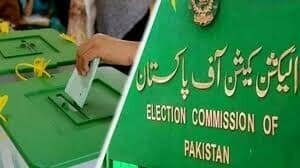
  • National Assembly dissolved: hunt for caretaker PM underway

    President Dr Arif Alvi, late on Wednesday, dissolved the National Assembly on the counsel of Prime Minister Muhammad Shehbaz Sharif.

    The prime minister’s decision to dissolve the assembly was swiftly acted upon, with the president endorsing the summary earlier presented by PM Shehbaz Sharif for the dissolution.

    However, despite this dissolution, Shehbaz Sharif will remain at the helm of affairs as prime minister until the nomination of a caretaker premier.

    This dissolution now mandates the Election Commission of Pakistan (ECP) to organise general elections within the subsequent 90 days, as per constitutional requirements.

    Reinforcing this, the Senate, earlier in the day, passed a resolution urging the ECP to ensure preparations for the impending general elections occur within the constitutionally stipulated timeframe.

  • We have no Prime Minister if the government refuses to nominate a name as another meeting is delayed

    We have no Prime Minister if the government refuses to nominate a name as another meeting is delayed

    In a crucial turn of events, the highly anticipated meeting between Prime Minister Shehbaz Sharif and Opposition Leader in the National Assembly Raja Riaz, scheduled for today, to decide on a name for the caretaker prime minister, has been postponed.

    The meeting has been rescheduled for tomorrow.

    The opposition leader has denied rumours that the meeting had been postponed for nefarious reasons and expressed eagerness for the upcoming conversation with Prime Minister Shehbaz Sharif.

    “The information circulating regarding the postponement of today’s meeting is not accurate,” declared Raja Riaz during a conversation with SAMAA TV.

    “The discussions between the Prime Minister and me are expected to take place today,” said Raja Riaz, highlighting the ongoing nature of the dialogue.