Tag: Pakistan

  • Govt to send one million Pakistanis abroad for employment

    Govt to send one million Pakistanis abroad for employment

    The Government of Pakistan will send 1 million citizens abroad for employment, Tikka Sani has reported for Samaa. Federal Minister for Overseas Pakistanis and Human Resource Development, Sajid Hussain Turi, while talking to Samaa said that the ministry is working on signing work visa agreements with fifty countries including Germany.

    He continued by adding that Saudi authorities are coming to Pakistan soon to issue visas and citizens who pass technical training tests will be able to get the visa.

    The minister further said that Japan has also opened visas for Pakistani workers while South Korea has a demand for 10,000 skilled workers from Pakistan.

    The Federal Minister for Overseas Pakistanis said that 27,000 blocked passports of overseas Pakistanis have also been restored.

  • ‘Zip your lips’; Rashid Latif thinks Shadab’s statement angered PCB

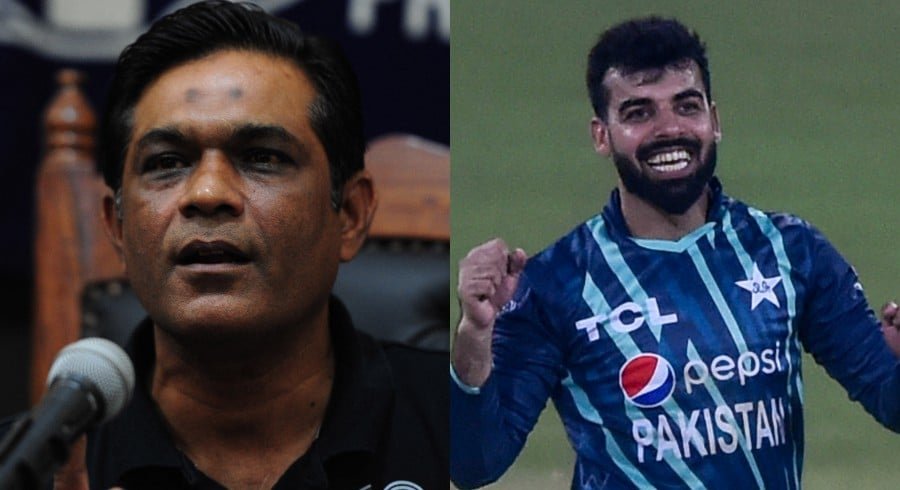
    ‘Zip your lips’; Rashid Latif thinks Shadab’s statement angered PCB

    Former captain and wicketkeeper batsman Rashid Latif has said that the Pakistan Cricket Board (PCB) that may be trying to punish Shadab Khan for speaking the truth.

    After losing the second T20 match against Afghanistan, Shadab Khan said that team management will now realise the importance of Babar Azam and Muhammad Rizwan, both of whom were rested for the series.

    The statement raised eyebrows among commentators, being interpreted as Shadab blaming the management for not sending star batsmen Babar and Rizwan for the series.

    Rashid Latif thinks that the statement has angered the Board and they now want to punish Shadab Khan by removing him as Vice-Captain.

    Pakistan captain, Babar Azam, and wicketkeeper, Mohammad Rizwan were rested from the recently-concluded Afghanistan series which Pakistan lost by 1-2.

    While reacting to the aforementioned news on his YouTube channel, Latif slammed the board for mentally torturing Pakistan cricketers.

    “One person is trying to speak the truth but they [PCB] are trying to zip his lips. Disturb him so much that he leaves cricket and makes him a psycho.

    Why do 90 percent of Pakistan players become psycho after leaving cricket? They become psycho because of Pakistan Cricket Board,” Latif said.

    “I don’t understand who brings these people on the board,” he concluded.

    Babar will once again be in the driving seat of Pakistan’s cricket team, resuming his responsibilities as captain in the series against New Zealand.
    The Kiwiswill arrive in Lahore and play three T20Is from 14-17 of April before traveling to Rawalpindi, where the final two T20Is and first ODI will be played from 20-26 of April.

    The tour will culminate in Karachi, with the remaining four ODIs to be played from April 30 to May 7.

  • ‘Mai in logon ke sath nahi bethoonga, meri team bethegi’: Khan refuses to sit with govt for talks

    ‘Mai in logon ke sath nahi bethoonga, meri team bethegi’: Khan refuses to sit with govt for talks

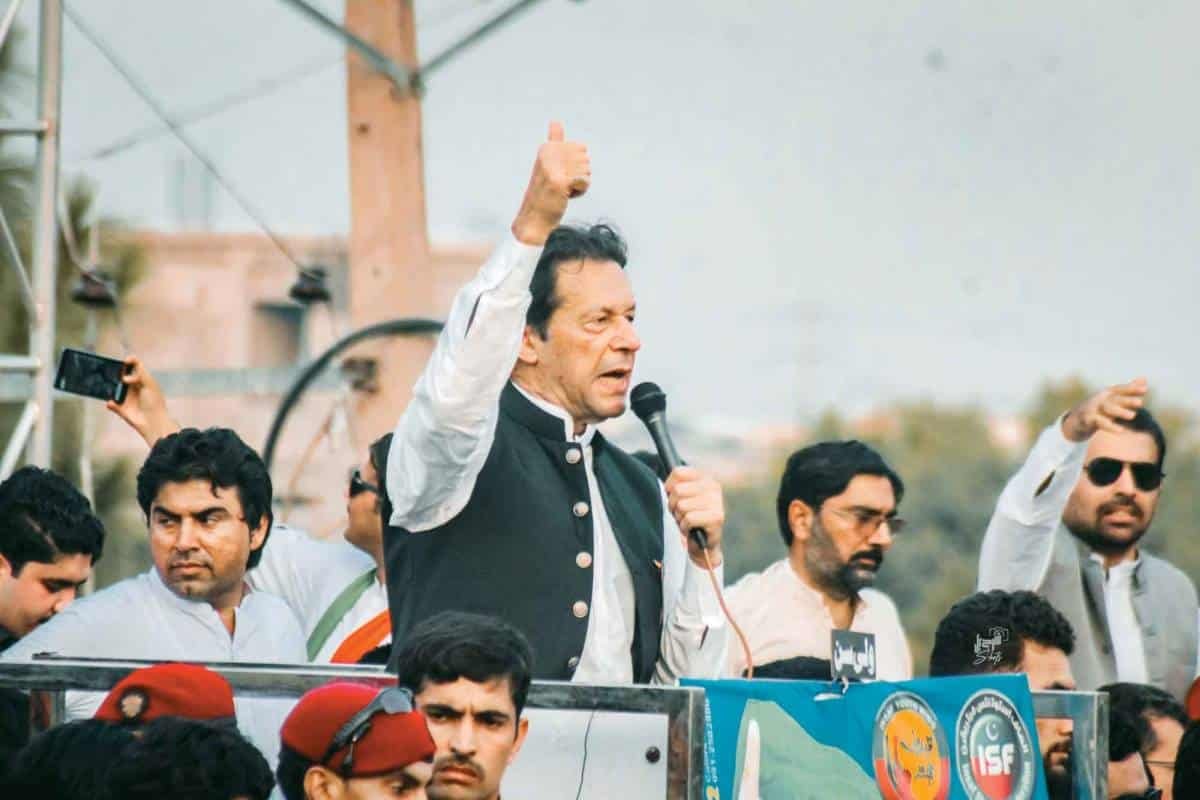
    Pakistan Tehreek-e-Insaf (PTI) Chairman Imran Khan has said that he will not sit with the government for dialogue, asserting that if any talks are held, his team will participate instead of him.

    “I will not sit with the government. And if any dialogues are held on the issue of elections alone, my team, not me, will participate,” said the PTI chief.

    “The dialogues should only be held on elections alone. However, I will not sit with those to whom I use to call thieves and corrupt,” he clarified. “And if the talks don’t go towards holding elections, then there is no benefit of dialogues,” he added.

    Khan had hoped that after former Chief of Army Staff General Qamar Javed Bajwa retired, there will be some change in the treatment given to his party, however, he claimed that matters have become even more difficult than they were before.

    “We were hoping that when Gen Bajwa leaves, and there is change of command there would be some change. However, we have seen no change. Everything is the same, or I should say that the policies have intensified,” said Khan in an interview to news website Urdu.com on Sunday.

    Khan said that he was not in contact with the establishment. He further said if talks are held on elections alone, his party will talk to anyone. When asked if the establishment has something personal against Khan, he said that he can’t say much about this but he knows one thing for sure that Gen (retd) Bajwa caused a lot of oppression on PTI. “We used to ask the police they would say that we have orders from higher ups,” he stated.

    Talking about forced disappearances, Khan said that he knew who was responsible for taking away PTI social media activist Azhar Mashwani.

    “We knew who took Azhar Mashwani. It was neither police who was involved nor FIA. We know which agency was behind it,” said Khan.

    “There are actually scared. They only want my complete blackout. They have banned me on media and now they’re after my social media presence,” said Khan.

  • TRIGGER WARNING- ‘If rape is imminent, then enjoy it’: PPP’s Nabil Gabol’s disgusting remarks once again get slammed on social media

    Trigger warning: rape jokes, kidnapping, assault, sexual harassment

    Pakistan People’s Party (PPP) politician Nabil Gabol has proved that one can be a legislator in the highest offices and yet resort to making extremely offensive, misogynist jokes whenever they can.

    Twitter users have decried PPP for claiming that they are a progressive party, but providing important positions to men like Gabol who make misogynist and degrading comments about women on public platforms. A clip from a YouTube podcast, The Pakistan Experience with host Shehzad Ghias, is going viral on Twitter where Gabol was a guest and where he said: “When rape is imminent, then just enjoy it.”

    To which activists like Soul Sister’s Founder Kanwal Ahmed responded with “Gross”.

    Journalist Zebunnisa Burki shared the clip on her Twitter page and lamented the fact that men in powerful positions are never held accountable for talking about women in a vulgar manner like he has.

    Founder of ‘Digital Rights Foundation’ and lawyer Nighat Dad criticized Gabol on her Twitter account for casually using rape as a punchline because of the way it malign’s the struggles of survivors of sexual violence, and especially called for politicians to be held accountable for their words because they hold positions of power and influence.

    Dad also shared a clip from Gabol’s previous interview with Youtuber Nadir Ali which took place in 2022, where the politician was seen making sexually suggestive comments about women politicians.

    In the same interview, a user shared a clip of Gabol openly claiming that he kidnaps girls and takes them under his possession.

    Recently, Gabol had given an interview to Nadir Ali, where a Twitter users shamed him for his sexual comments about the TikTok star Ayesha, and for asking for her number.

    Writer and columnist Fatima Bhutto shared the clip from Gabol’s interview with Ghias, and in the caption she condemned his comments for exposing the ‘criminal mindset of the Sindh government.”

    Bakhtawar Bhutto, the sister of PPP chairman Bilawal Bhutto-Zardari, condemned Gabol on Monday morning in a tweet.

    His (repulsive) rhetoric belongs to his individual only & is in noway a representation of our party. Incase it wasn’t already abundantly obvious- we absolutely & unequivocally stand for the rights & protection of women. Misogyny has no space in our religion nor our party.”

    However, users demanded that Gabol be removed from the party, calling the tweet a tone-deaf response to criticism.

    Minister of Climate Change Sherry Rehman has responded to the controversy in a tweet saying that strict action was underway.

  • Muhammad Amir gears up to comeback in international cricket

    Muhammad Amir gears up to comeback in international cricket

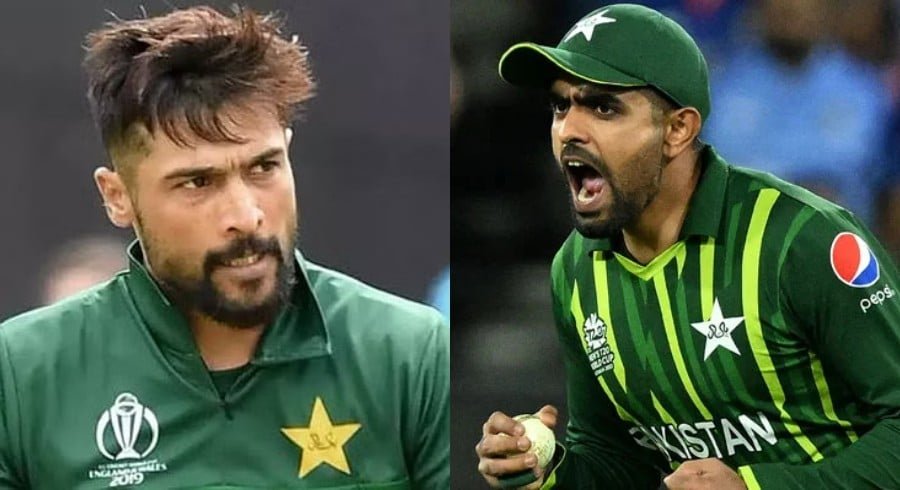
    Selectors of the national cricket team have hinted that left-arm fast bowler Muhammad Amir is gearing up to wear the Pakistan cricket team kit once again.

    Sources have said that an important official of Pakistan Cricket Board (PCB) recently met Muhammad Amir’s manager and gave a green signal to the left-arm pacer by advising him to be prepared while gearing up for a comeback.

    According to a media report, the selector has warned Amir to just focus on his cricket and avoid giving unnecessary statements in the media, which might create controversy.

    The report further added that he will soon be asked to take his retirement back, so he needs to keep practicing and keep himself fit till then.

    Amir called time on his international career in 2020 in protest over the treatment he had received from the then-management, led by Misbah ul Haq.

    However, after Najam Sethi took charge of PCB, the management committee chairman said in a media interaction that Amir would be considered for selection like other players, if he takes his retirement back.

    “Mohammad Amir can play international cricket for Pakistan if he takes his retirement back. I always took a strong stance against match-fixing. I believe no convicted player should be spared, but at the same time, a player should be allowed to resume international cricket once he has completed his years of penalty,” said Sethi.

    Muhammad Amir is the key-bowler for Karachi Kings. The bowler’s remarks often land him into controversy.

    Despite retiring, Amir continues to play in leagues around the world and recently represented Karachi Kings in Pakistan Super League (PSL).
    Recently Pakistan’s former captain wicketkeeper batter Sarfaraz Ahmed praised Amir, stating that he is better than any other left-arm pacer on the team right now.

  • Nadra confirms data theft of Army Chief’s family

    Nadra confirms data theft of Army Chief’s family

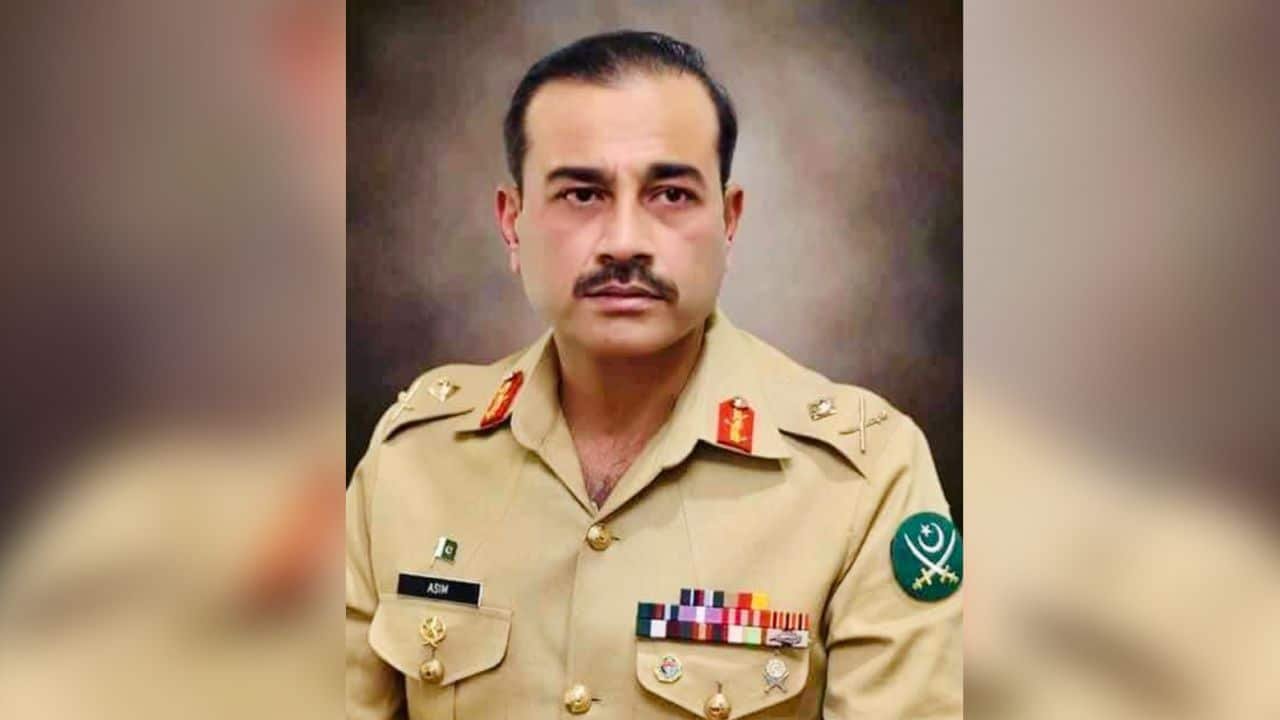
    In a news report published on Sunday in The News, it was stated that the National Database Registration Authority (NADRA) is set to finalise an inquiry identifying those behind a data leak involving the incumbent Chief of Army Staff (COAS) General Asim Munir’s family.

    Journalist Azaz Syed wrote that NADRA has issued a detailed statement confirming the data theft of Army Chief’s family, according to the same news outlet.

    According to the report, “Nadra finalises probe into illegal access to COAS family’s data, dated April 02, 2023, it is to clarify that the subject probe into illegal access to COAS family’s data is a continuation of Nadra’s stringent measures to protect the citizens’ data from unauthorised access, when he sought help from premier security agency upon assumption of charge as chairman Nadra in June 2021.”

    Multiple users of different organisations had accessed General Asim Munir’s data before he was appointed COAS. Other than Nadra, nine institutions, including law enforcement agencies, banks and housing authorities, accessed the COAS’s family data.

    About the ongoing inquiry, COAS’s family data was accessed in absence of Nadra Chairman Tariq Malik, who was on ex-Pakistan leave (on official assignment) in November 2022.

    Last November, illegally-accessed information was reportedly used in an attempt to block the appointment of the current army chief.

    In October 2022, five senior Lieutenant-Generals were contending for the position of Pakistan’s new army chief. During this time, a junior data entry operator at NADRA, Farooq Ahmed, allegedly accessed the data of a female family member of Gen Munir and collected the family’s details and identity card numbers.

    This data was later used in the Federal Investigation Agency’s (FIA) Integrated Border Management System (IBMS) to track international travel destinations the family had travelled to.

    The prime minister had an investigation launched into the data leak.

    As regards to the ongoing probe into the COAS family’s data, the NADRA chairman ordered the inquiry which is in the closing phase. Culprits, from DGs to the data entry operators, have been identified.

  • Ishaq Dar to attend IMF, World Bank meetings in US

    Ishaq Dar to attend IMF, World Bank meetings in US

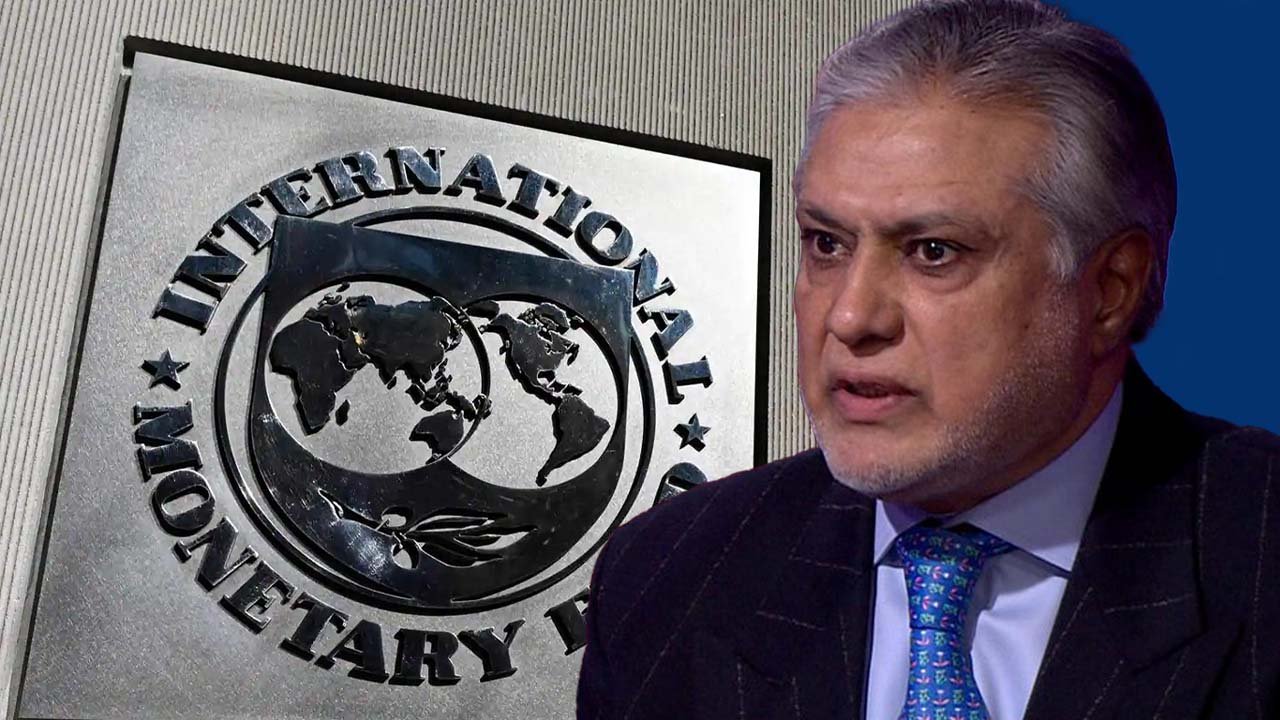
    Finance Minister of Pakistan, Ishaq Dar, will lead a delegation to the United States to attend the annual spring meeting of the Breton Wood Institutions (BWIs), comprising the International Monetary Fund (IMF) and World Bank, from April 10 to 16.

    The delegation includes officials from the Finance and Economic Affairs Division and the State Bank of Pakistan (SBP) governor. The delegation is expected to present new proposals to the IMF and World Bank for the provision of dollar inflows.

    IMF and Pakistan will also discuss the possibility of combining the remaining 10th and 11th reviews under the Extended Fund Facility (EFF) program, worth $6.5 billion, if the pending 9th review is completed. The EFF program, signed in 2019, is set to expire on June 30, 2023, and cannot be extended beyond the deadline.

    The delay in the 9th Review’s completion, scheduled for December 2022, has resulted in the delay of the 10th Review, which was to start in February 2023. The 11th Review was scheduled to begin on May 3. The delay in the 9th Review will increase the cost of correcting the situation.

    The government of Pakistan has taken difficult decisions to revive the IMF program, but there is no easy solution to the country’s ailing economy. The IMF is seeking verification from Pakistan’s bilateral friends, including Saudi Arabia, the UAE, and Qatar, to provide additional assistance of $6 billion until the end of June 2023.

    SBP’s foreign exchange reserves currently stand at $4.2 billion, which is insufficient to meet obligations related to foreign debt servicing, including principal and markup. It remains to be seen how the completion of the bailout program will proceed, given the delay in the 10th Review.

  • Pakistan to receive first-ever shipment of low-cost oil from Russia in May

    Pakistan to receive first-ever shipment of low-cost oil from Russia in May

    Minister of State for Petroleum, Musadik Malik, announced on Sunday that Pakistan will receive its first-ever shipment of low-cost oil from Russia next month, which is expected to benefit the general public.

    In an interview with a private news channel, the minister confirmed that the government had finalised a deal with Russian authorities following successful dialogues. The shipment is expected to arrive in May via cargo. The minister also ensured that the government will pass on the cost savings to consumers.

    Regarding power and gas tariffs, Malik stated that the government is planning to introduce different tariffs for the poor and elite classes. He stated that the government has already made progress in this regard and hopes to issue separate billing for the underprivileged and elite class. The new tariff structure is expected to provide relief to the poor segment of society.

    Last month, officials from the Petroleum Division had disclosed that Pakistan was in talks with Russia to procure crude oil at around $50 per barrel, which is $10 per barrel lower than the price cap imposed by the G7 countries on oil imports from Russia due to its conflict with Ukraine.

    The officials had shared that Moscow was keen on completing all the prerequisites, such as the mode of payment, shipping cost with premium, and insurance cost, before signing the agreement with Pakistan.

  • The high cost of not automating healthcare records can be death

    The high cost of not automating healthcare records can be death

    Shafiq* is a middle-aged Pakistani man, working as a driver for a household in Lahore. His son has just been diagnosed with early-stage lung cancer. He finally manages to take time off to take his son to an oncologist in a government hospital. The oncologist asks for all the lab reports of the patient. Shafiq hands over a heavy file. It turns out, one of the reports has been misplaced. The doctor tells Shafiq to come back after getting his son’s lab work done again. Shafiq now has to find the money to pay for more testing and also has to plead with his boss to give him another day off. Meanwhile, his son’s condition is only getting worse.

    When a healthcare system has no proper infrastructure for medical record keeping, the result is waste and medical errors. For example, the cost of repeat lab work will either be borne by Shafiq if he goes to a private lab or by the taxpayer if he opts for a government one. Repetition of tests will also use up limited laboratory resources and delay the test results of other patients. Shafiq’s story also points out another avenue of concern: medical misdiagnoses. Generally, a primary care physician, or family doctor, ensures an individual’s health through keeping family histories, doing annual health screenings and ensuring immunisations. These doctors maintain all this information is the form of electronic medical records. Shafiq’s son had no such family doctor to track his smoking habits or note the prevalence of cancer in his family history. In fact, the first doctor he saw gave him antibiotics for what he diagnosed as a bacterial infection of the lungs.

    In a country with less than 125,000 government hospital beds for more than 200 million people, there is little room for such errors. According to the World Health Organisation (WHO), Pakistan has one of the lowest per capita current health expenditures among Eastern Mediterranean countries, second only to Afghanistan. Because of our chronic debt issues, our healthcare spending will likely remain dismal. In such an environment, technology is a relatively inexpensive tool that can be used to improve efficiencies and better population health.

    Pakistan’s larger cities are home to a select few secondary and tertiary care hospitals, which are meant to provide inpatient care, ambulatory services and specialist care. The major swathe of the country, however, does not have access to these hospitals. In rural areas, the major public health facilities are small establishments called Basic Health Units (BHUs). In the more than 5,500 BHUs across Pakistan, outpatient facilities are provided to ordinary citizens. Contrastingly, the private sector is dominated by specialist care with doctors running their own independent clinics. Here, primary care is seen as neither lucrative nor prestigious. Patients do their own guesswork at diagnosing their problems and then decide which specialist they should see.

    But be it private or public, most doctors in Pakistan are reliant on pen and paper for record keeping. Patients like Shafiq* are meant to keep these physical records safe in a folder and bring them to each appointment. According to one doctor practicing in a government-run tertiary hospital in Lahore, the only records their hospital keeps is the patient’s admission date, discharge date and what kind of operation was performed. Any blood tests, imaging or other notes go into a black hole of patient data. 

    This is all set to change in the province of Punjab. The government is in the process of completing its transition from physical registers to electronic medical records in BHUs across the province.

    Khalid Sharif is Manager MIS in the government’s Health Information and Service Delivery Unit (HISDU). His unit aids the primary and secondary health department in developing and running health dashboards, inventory management systems and mobile applications.

    “Electronic Medical Records (EMR) came about because we wanted to be able to assess our performance as a department,” he said. “Before this, we had no credible way of knowing any metrics like doctor-patient ratios or the number of daily births.”

    The process began in around 2017, when they began testing out earlier versions of EMR in select BHUs. Now, they are running the multi-module application across more than 2,500 BHUs.

    “We expect to be fully paperless in about one and a half month’s time,” he said.

    Each employee at a BHU logs in using their computerised national identity card (CNIC) number and has access to a different module of the system. When a patient comes in, they are registered using their CNIC number. The receptionist takes the patient’s vitals and adds them to their profile. Then, when the patient goes to the doctor’s office, the doctor select a diagnosis and prescribes medicine. Finally, the medicine dispenser checks off the prescription he/she is filling, which automatically updates inventory records.

    “If someone doesn’t have a CNIC we have created another option,” Sharif said. “They can use a relative’s CNIC and we can select their relationship to the CNIC holder.”

    Dr. Faiza Ahmed* has been practicing as a health officer at a BHU near Faisalabad for the last couple of years. When I visited her, they were partially using the EMR system. Out of the 150 patients that had been to the BHU that day, they had electronically registered around 90 of them.

    Most of her patients, especially women, don’t bring along CNICs. But she has made it a point to especially encourage expectant mothers to bring along their own or a relative’s CNIC so that she can track the health of mothers and babies. “This way, I can see a patient’s data even if she had her baby six months ago,” she said. “I can see if she was hypertensive or diabetic back then and how her child was doing back then.”

    Dr. Ahmed has not received instructions to go paperless and she is skeptical of the idea.

    “It’s practically impossible to register all 200 patients because of resource limitations,” she told me. “Internet speed in this area is also very slow.”

    When I asked Khalid Sharif about this, he said that they had already address this issue by creating an offline version of the software which automatically uploads the data when the internet reconnects. However, Dr Ahmed said that the offline version is not functional yet.

    Another reason why the system might feel tedious to Dr Ahmed is because they are currently running two parallel systems. The EMR system has been designed with the idea of print receipts. When the midwife sends the patient off to the doctor, they are supposed to bring their registration slip along. Similarly, the doctor is supposed to print out a prescription slip and hand it to the patient. However, Dr. Ahmed contended that the BHU cannot afford to thermally print slips for every patient. So currently they are both logging data online and writing all the information manually on pieces of paper to give to the patients.

    “I think there’s always resistance to change — everyone gets used to a certain system and doesn’t want to get out of it,” Zara Ansari, a consultant for the government, said. “As with any new data system, it takes time, but this is definitely the future.”

    Zara Ansari is a senior consultant at ACASUS, a management consultancy firm that is assisting the health department with the rollout of electronic medical records. Ansari and her team have been giving trainings to doctors to make them comfortable with the new system. They have also been analysing data for the government to monitor the level of compliance that each BHU is showing.  

    “We started off by assigning lax targets so people can be onboard with actually doing this and then progressively over time making it more strict,” she said. “As of recently, we will be monitoring to see which facilities are doing completely paperless entry.”

    There are of course caveats to this new age technology. There is not a lot of clarity around the privacy of the date being collected and how it will be kept safe. There seem to be no conversations happening around data privacy or patient confidentiality in government halls. 

    Caveats and all, Punjab is making a step forward into modern healthcare. How successful they will be is something only time can tell.

    (*Names have been changed to protect privacy)
  • Nawaz to visit Saudi as royal guest

    Nawaz to visit Saudi as royal guest

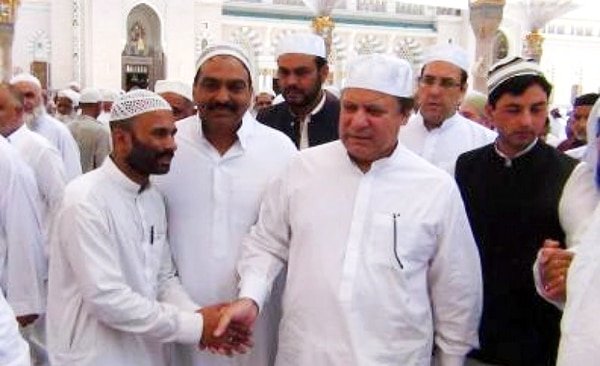
    Pakistan Muslim League-Nawaz (PML-N) supremo Nawaz Sharif will perform Umrah in the last days of Ramzan on the invitation of the royal family.

    Nawaz is set to visit the Kingdom on the invitation of the Saudi ruler, with the former Prime Minister being a royal guest in the country.

    The news of Sharif’s planned visit to Saudi Arabia has led to speculation that he may use the opportunity to return to Pakistan. However, there has been no official confirmation from Sharif or his party about his plans to return.

    The PML-N supremo was granted an eight-week bail on medical grounds in October 2019, and, he was allowed to travel to London for treatment for four weeks. However, Nawaz has not returned since then.