Tag: Pakistan

  • Pakistan’s inflation rate surges to an all-time high, reaching 38.9% in rural areas

    Pakistan’s inflation rate surges to an all-time high, reaching 38.9% in rural areas

    According to recent reports, the finance ministry’s expectations of high inflation were met due to market frictions caused by the relative demand and supply gap of essential items, exchange rate depreciation, and recent upward adjustment of administered prices of petrol and diesel. However, there was a monthly decline in the inflation rate, which dropped to 3.7 per cent in March compared to February.

    Despite this, the inflation situation has worsened significantly over the months, causing mass distress due to the high prices of almost every edible item. The core inflation rate, which excludes volatile energy and food prices, increased in March to 18.6 per cent in urban areas and 23.1 per cent in rural areas. Experts believe that Pakistan is now heading towards hyperinflation, where prices are out of control and expected to surge by 50 per cent.

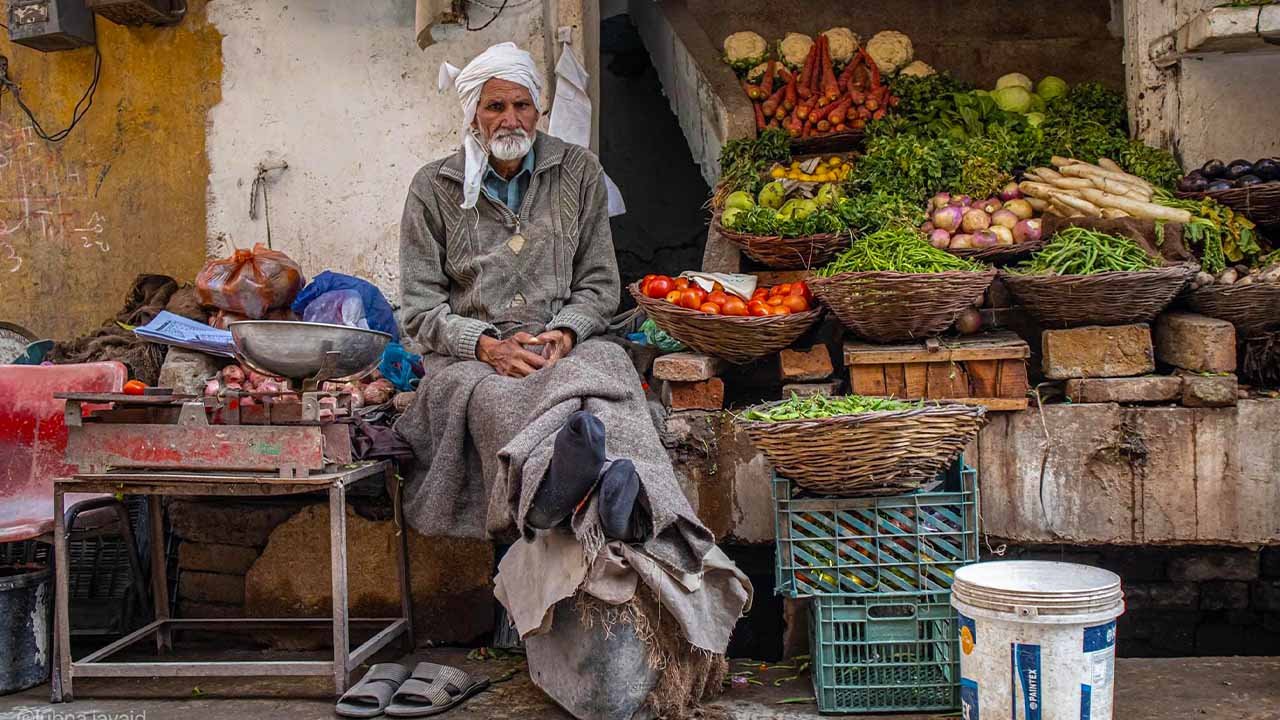
    The Pakistan Bureau of Statistics (PBS) reported that the inflation rate in rural areas reached 38.9 per cent, while it surged to 33 per cent in the cities. Food inflation rose sharply to 50.2 per cent in rural areas and increased to 47.1 per cent in urban areas last month. Supply chain disruptions and weak checks have led to a substantial rise in the food inflation rate.

    Unfortunately, both the federal and provincial governments are unable to provide steady essential food supplies, and the prices of most consumer goods remain out of reach for the people. This surge in prices coincides with a significant economic slowdown, and poverty and unemployment levels are rising.

    A majority of the surge in prices was seen in rural areas where income levels were already low. The food group prices rose by 47.15 per cent in March compared to the same month last year. Both perishable and non-perishable food items witnessed unprecedented increases in prices.

    The Wholesale Price Index (WPI), which monitors prices in the wholesale market, also rose sharply to 37.5 per cent in March compared to 23.8 per cent in the same month last year. The inflation rate has remained above 20 per cent since June after the coalition government curtailed imports.

    The overall inflation rate recorded an increase in both urban and rural areas, with urban areas surging to 33 per cent in March, while rural areas soared to 38.9 per cent over the same month last year. In March last year, the inflation rate in urban areas was 11.9 per cent, while in rural areas, it stood at 13.9 per cent.

    The non-food inflation rate increased to 24.1 per cent in urban areas and 28.5 per cent in rural areas compared to 10.4 per cent and 12.5 per cent in the same month last year. Prices of non-perishable food items surged by 46.44 per cent on an annualized basis, and the prices of perishable goods surged by 51.81 per cent year-on-year.
  • Proposed French bill will require influencers to disclose filters used on their pictures

    A new law proposed by the French Finance Minister Bruno Le Maire will soon ban social media influencers from uploading photos without mentioning re-touches or filters they have added to them.

    The new law seeks to curtail cosmetic surgery, keeping in mind its ill effect on the mental health of teenagers. The law states that any new picture or video uploaded will also include the filters added to it in the caption or description, while all promotions of cosmetic surgery will be banned.

    Penalty for revoking this law could include up to two years in prison and $32,525 in fines, while the influencer responsible for breaking the law would also be banned from using social media or profiting from being an influencer.

    Speaking to a French website, Le Maire said that the law was not an attempt to restrict influencers. It was to create a system that protects them as well as consumers.

    This is not the first time France has taken strict measures to tackle the rise of inaccessible beauty standards. In 2017, the country passed a law requiring any commercial photo that has been re-touched to change the model’s body to be labeled as ‘photographie retouchée’ (retouched photograph).

  • PDM moot meets today to discuss future strategy for the government

    PDM moot meets today to discuss future strategy for the government

    Leaders of the Pakistan Democratic Movement (PDM) will meet today to discuss future strategy for the government.

    Chairing the meeting from via a video link, Prime Minister (PM) Shehbaz Sharif will discuss the “overall political situation of the country” while Law Minister Azam Nazir Tarar will brief the members on legal issues, Radio Pakistan said.

    The current political situation, the upcoming elections in line with the Election Commission of Pakistan’s (ECP) decision, and the SC proceedings, as well as the role of the CJP and the top court, will all be under discussion.

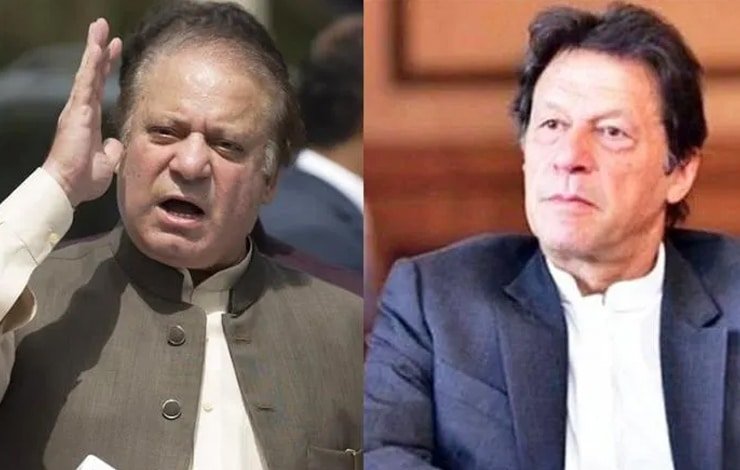
    Earlier, Pakistan Muslim League-Nawaz (PML-N) supremo, Nawaz Sharif, had spoken out against the decision to disqualify him as prime minister, stating that it hurt the future of the country.

    Speaking at a press conference in London on Friday evening, Nawaz said, “I appeal to my people, open your eyes. This is a cruel joke. In 2017, weren’t you happy? You had full stomachs, your families were content. After 2017, what was the situation?”

    Hitting out at the judiciary, Nawaz criticised incumbent Chief Justice of Pakistan (CJP) Umar Ata Bandial and former CJP Saqib Nisar and said there was consensus “among all” that a full court should hear the elections case.

  • Jalsa attend karein Khan ka magar reply sirf Bilawal ko, Humza Yousaf ignores Imran after becoming Scotland’s leader

    Humza Yousaf has made history by becoming Scotland’s first Muslim First Minister.

    Yousaf has ignited considerable curiosity in Pakistan as to his roots and political inclinations.

    Digging deep, we found a very old tweet of Humza and it seems like he had been an admirer of Pakistan Tehreek-e-Insaf (PTI) Chairman Imran Khan. In 2012, the newly-elected Scotland leader attended Khan’s jalsa and met him.

    He wrote: “Great rally amazing energy at Imran Khan rally and very good meeting with him afterward.”

    Recently, when Imran congratulated Humza on being elected, Scotland’s First Minister ignored the tweet, however, he replied to current Foreign Minister (FM) Bilawal Bhutto-Zardari instead.

    The minister wished him well saying, “Wishing you all the best for your term in Bute House and looking forward for strong partnership in the domains of trade, investment, culture and education.”

    In response, Humza mentioned that “Pakistan will always have a special place in his heart”.

    “Scotland’s relationship with Pakistan is a friendship that has blossomed through many generations, I look forward to it growing stronger, ” he added.

  • PM Shehbaz orders two free flour bags instead of one for citizens

    PM Shehbaz orders two free flour bags instead of one for citizens

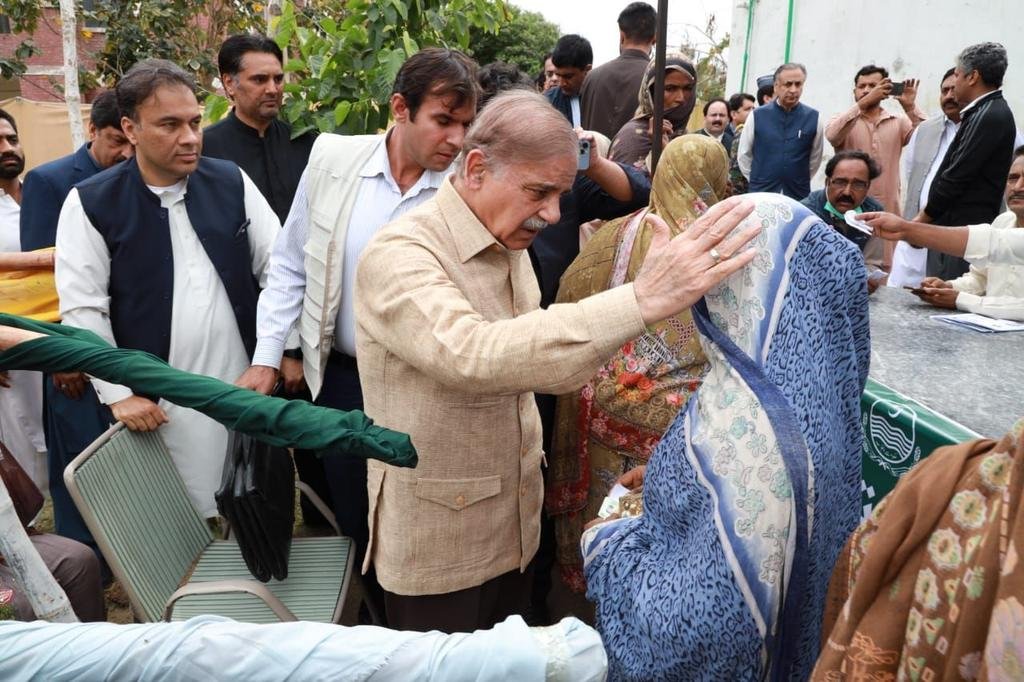
    Prime Minister (PM) Shehbaz Sharif paid a visit to a flour distribution centre in Islamabad on Friday to oversee the work.

    During the visit, the premier directed authorities to give priority to the distribution of flour bags to aged persons and women.

    He also decided to provide two flour bags instead of one so that the people do not need to visit the distribution centres frequently.

    He asked relevant authorities to chalk out a facilitatory mechanism for the person who can only present the photocopy of CNIC in case the original card is missing.

    Under the Ramzan package jointly initiated by the prime minister and the Punjab government, 20 million bags of free flour have been distributed among deserving citizens by the 10th day of the programme.

  • ‘Are all decisions and benches only for Imran Khan?’: Nawaz raises questions on judiciary

    ‘Are all decisions and benches only for Imran Khan?’: Nawaz raises questions on judiciary

    Pakistan Muslim League-Nawaz (PML-N) supremo, Nawaz Sharif, has spoken out against the decision to disqualify him as prime minister, stating that it hurt the future of the country.

    Speaking at a press conference in London on Friday evening, Nawaz said, “I appeal to my people, open your eyes. This is a cruel joke. In 2017, weren’t you happy? You had full stomachs, your families were content. After 2017, what was the situation?”

    Hitting out at the judiciary, Nawaz criticised incumbent Chief Justice of Pakistan (CJP) Umar Ata Bandial and former-CJP Saqib Nisar and said there was consensus “among all” that a full court should hear the elections case.

    “Then why this zid [stubbornness]? Why the insistence that only three judges will be on the bench? This is a national issue, not the issue of one truck, cart or of vacating a plot. Why just these three judges?” he questioned.

    “All political parties have said this, the government wants this, bar associations want this, parliament has expressed its will and even passed its bill. It is now with the president… parliament is the country’s major institution, its sanctity should be respected,” he elaborated.

    Justice Bandial has been criticised for forming what critics have called a “like-minded bench” to hear major cases, ignoring senior judges, most notably Justice Qazi Faez Isa.

    “For one man, you [the judges] are giving decisions? Have you ever taken a suo motu on things said by Justice Shaukat Siddiqi? Or what ex-COAS Gen Bajwa said? Doesn’t this warrant a suo motu that Nawaz Sharif was treated unjustly,” Nawaz Sharif asked, who was disqualified for life by a Supreme Court bench.

    “Are all decisions and benches for Imran Khan?” questioned the former Prime Minister, adding “I also heard that the chief justice had tears in his eyes, if these are from fear of God then that is welcome news. I cannot say more.”

    Furthermore, Nawaz called for a full court to be formed to hear a petition by the Pakistan Tehreek-e-Insaf (PTI) against the delay in Punjab elections.

  • Pakistan’s inflation expected to rise due to policy decisions and economic uncertainty, warns Finance Ministry

    Pakistan’s inflation expected to rise due to policy decisions and economic uncertainty, warns Finance Ministry

    Finance Ministry has warned that inflation in Pakistan is set to rise further due to a second-round effect of policy decisions made earlier this year to raise energy and fuel prices, the central bank’s policy rate, and the depreciation of the rupee to secure IMF funding.

    The recent political and economic uncertainties in the country are causing inflationary expectations to rise. The short-term rate of inflation measured by the Sensitive Price Indicator (SPI) hit a record 46.65 per cent last week, while monthly inflation recorded by the Consumer Price Index (CPI) reached 31.6 per cent in February – the highest in six decades.

    The ministry expects inflation to stay at an elevated level due to market frictions caused by the relative demand and supply gap of essential items, exchange rate depreciation, and recent upward adjustments of administered prices of petrol and diesel. Production losses due to floods have not yet been fully recovered, especially those of major agricultural crops. The shortage of essential items has persisted due to these factors.

    Moreover, the delay of stabilisation program has exacerbated economic uncertainty, due to which inflationary expectations have remained strong. The Economic Adviser’s Wing of the finance ministry has also conceded ineffective policy measures and the haplessness of the authorities in containing the inflationary spiral.

    A report from ministry warns that bulk buying during Ramzan might cause the demand-supply gap and result in escalation of essential items prices, although the government is taking steps to ensure a smooth supply of essential items. The report also warned that being largely dependent on prevailing climatic conditions, as witnessed last year, the delay in rains and early heatwave forecast by the Pakistan Met Office in April and May could adversely impact wheat production.

    On a positive note, the report said that despite challenges and uncertainties, the economy was showing continuous signs of resilience as depicted through contained fiscal and current account deficits during the current fiscal year.

  • Atlas Honda increases bike prices, Honda CG125 now priced at Rs222,900

    Atlas Honda increases bike prices, Honda CG125 now priced at Rs222,900

    Atlas Honda, the leading manufacturer in Pakistan’s two-wheeler industry, has recently announced a revision in the prices of its motorcycles. Effective immediately, the prices have increased up to Rs15,000, depending on the variant.

    As a result, the popular Honda CD70 motorcycle now carries a price tag of Rs149,900, while the base variant of the Honda CG125 is priced at Rs222,900.

    Here are the new prices of all Honda bikes:

    Bike Retail price  (Excluding sales tax) Sales tax — 18 per cent Retail price  (Including sales tax)
    CD70 Rs127,033.90 Rs22,866.10 Rs149,900
    CD70 DREAM Rs136,355.93 Rs24,544.07 Rs160,900
    PRIDOR Rs167,711.86 Rs30,188.14 Rs197,900
    CG125 Rs188,898.31 Rs34,001.69 Rs222,900
    CG125S Rs225,338.98 Rs40,561.02 Rs265,900
    CB125F Rs310,084.75 Rs55,815.25 Rs365,900
    CB150F Rs388,898.31 Rs70,001.69 Rs458,900
    CB150F Rs392,288.14 Rs70,611.86 Rs462,900

    Unfortunately, due to the recurrent price hikes from various bike manufacturers, two-wheelers are gradually becoming a luxury item, with no bike being sold below Rs100,000, even those from Chinese brands.

    Furthermore, the company has also extended the closure of its production plant for 15 days. In a similar move, Yamaha Motor Pakistan has also announced an increase in the prices of its five models, citing the rising cost of production as the primary reason.

  • ‘More mouths to feed than we can cope with’: Street Kitchen ‘Khana Ghar’ feeds millions of Pakistanis amid inflation

    Due the ongoing inflation crisis in Pakistan, food and petrol prices have risen astronomically, leading to many families finding it difficult to afford basic necessities like rice or flour. Writing for The Guardian, Zofeen T Ebrahim has covered the story of the street kitchen ‘Khana Ghar’ set up in Karachi’s poorest district by Parveen Saeed, who has been serving food to families for the past 22 years.

    Opening up to The Guardian, Saeed said that the kitchen has become even more busy since Ramzan began, as more families have arrived to receive one-month food rations:

    “But we can only give one bag to one family, and we need their ID cards to check that,” she said. “There are more and more mouths to feed than we can cope with.”

    Saeed, who had received the Pride of Performance award in 2021, sells salan and roti to families for only Rs 3. Before the Covid-19 lockdown, the kitchen provided meals for 6,000 people, but afterwards it rose to 7000, and now currently stands at 8,200.

    Saeed revealed that people stand in line for long hours in order to eat, because the ongoing political and economic instability has made it difficult for people to make a living:

    “These people are not beggars, they have become destitute..where are the jobs?”

    “Food prices have hit the sky. It is heartbreaking as they have waited for a couple of hours, only to leave empty-handed.”

    The newspaper also spoke to some of the regulars who visit Khana Ghar. Former construction worker Mohammad Shakeel, a father of six, suffered a head injury and broken wrists after which finding work became incredibly hard. He said the food was a ‘Godsend’ because “with a kilo of flour costing 150 rupees, we would not be able to survive the jump in food prices.”

    A widow who has been relying on Khana Ghar to feed her polio ridden daughter and toddler grandson said, “Had it not been for Parveen, we would have died from hunger.”

  • TRIGGER WARNING: Lodhran court sentences man to 25 years in prison for raping daughter

    A court in the Lodhran has sentenced a man to 25 years in prison and subjected to Rs 1,00,000 fine for torturing and raping his 15 year old daughter, as reported by Express Tribune.

    The rape case was filed by the survivor’s paternal aunt, Yasan, who revealed that she was suspicious when the father, Irshad, brought the girl to her house unconscious.

    The complainant told the police that after the girl woke up, she confessed to her aunt that her father had drugged and tortured her. When she and other witnesses approached Irshad, he confessed to the crime.

    The aunt urged the police to take strict action against the rapist.