Tag: Pakistan

  • Pakistan mein ‘Super Blue Moon’ kis waqt daikhein?

    Pakistan mein ‘Super Blue Moon’ kis waqt daikhein?

    Once in a blue moon is going to be a reality tonight. On the night of August 31, a celestial spectacle known as the ‘Blue Moon’ will captivate astro enthusiasts around the world. Despite its name, this unique event won’t unveil a blue-hued moon; instead, it will radiate a captivating shade of orange.

    The Super Blue Moon Experience

    During this event, the Super Blue Moon will be slightly larger and brighter than a typical full moon. Supermoons shine about 40 percent larger and 30 percent brighter than regular full moons. While the size difference may not be discernible to the naked eye, binoculars can enhance the view of this captivating phenomenon.

    When and How to Observe the Super Blue Moon

    In Pakistan, the spectacular view of the Super Blue Moon can be seen from 6:25 AM PKT till 6:40 AM. The moon will be full at 6:35 AM PKT.

    European viewers will have an extended opportunity to witness the moonrise, providing an additional chance to catch a glimpse of this celestial event. In London, the moon will rise at 8:08 PM BST. For those in New York, moonrise is set for 7:45 PM EDT, followed by moonset at 7:33 PM EDT, with the full moon radiating its brilliance at 8:37 PM EDT.

    In Los Angeles, both moonrise and sunset are scheduled for 7:36 PM PDT, and the full moon will grace the sky at 5:37 PM PDT. London residents can experience the Blue Moon at 7:52 PM BST during sunset and 8:24 PM BST, with the full moon’s appearance at 1:37 AM BST.

    Understanding the Blue Moon Phenomenon

    A Blue Moon is an extraordinary astronomical event that occurs when a supermoon or full Moon coincides with a perigee—when the Moon is closest to Earth in its orbit.

    While Blue Moons aren’t exceedingly rare occurrences, they remain intriguing phenomena in the world of astronomy. The most recent Blue Moon graced the skies in August 2021, as reported by Space.com. With the average lunar cycle spanning approximately 29.5 days, a year typically accommodates 12 lunar cycles, totaling 354 days. As a result, roughly every 2.5 years, a thirteenth full moon emerges within a given year.

    This upcoming event, the super blue moon, marks the final chapter of a four-part lunar sequence and is anticipated to be the third-largest moon visible throughout this year. It’s important to note that the term “blue moon” has no connection to the moon’s color; it merely signifies the occurrence of two full moons within a single calendar month.

    How rare is a blue supermoon?

    According to NASA, the blue supermoons are a very rare phenomenon. It mentions that these moons often only appear once every ten years due to astronomical conditions. But occasionally, the interval between blue supermoons can be as long as twenty years. While blue moons only account for 3% of full moons, supermoons account for around 25% of all full moons. Although the interval between super blue moons is highly erratic—it can be as long as 20 years—the average is often 10 years. The following super blue moons will take place in pairs in 2037, in January and March.

  • Cops who shot at Arshad Sharif rejoin Kenyan police without accountability

    Cops who shot at Arshad Sharif rejoin Kenyan police without accountability

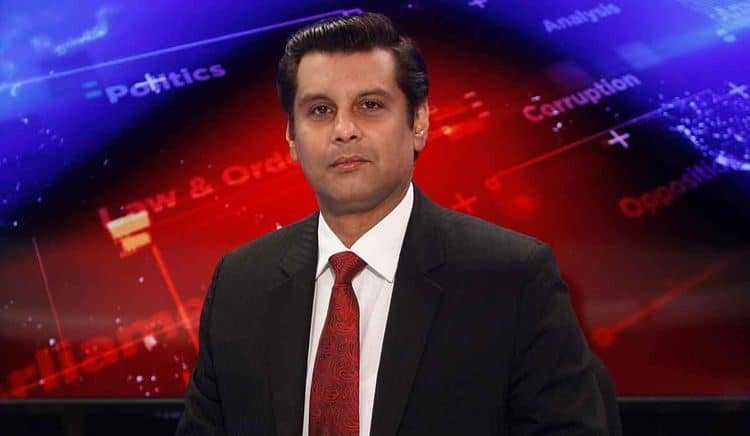
    Geo news has been investigating journalist Arshad Sharif’s murder case. In their latest update, Geo has revealed that the five Kenyan police officers involved in the killing have resumed duties without any action taken against them.

    A security source also told Geo that the two of the shooters have been promoted to senior ranks.

    Kenya’s Independent Policing and Oversight Authority (IPOA), investigating the conduct of police officers and after Sahir’s murder, had assured authorities of giving updates on Sharif’s murder within weeks but more than nine months later, no findings have been made public.

    IPOA had said in a statement that “We shall give an update on the matter once we are done with the investigations”.

    The authority’s spokesperson neither provided a timeframe nor responded as to why the watchdog has taken so long and why the police officers have been absolved of any accountability.

    Geo further reported that IPOA had submitted its file to the Office of the Director of Public Prosecution (DPP) but it was returned back and gaps were asked to be filled before the prosecution began.

    According to a Geo News, “Investigations into the murder of the journalist seem to have gone silent in the East African country”.

    A police officer attached to the General Service Unit (GSU), Kevin Kimuyu Mutuku, was allegedly shot at the time of Sharif’s killing.

    The police officer rejoined work right after he was discharged from hospital. He has claimed that was shot and wounded when bullets were fired from inside Sharif’s vehicle but the forensic investigation showed he was lying.

    Geo reports that a trusted Kenyan intelligence source, who chooses to remain anonymous, said that the National Police Service (NPS) in Kenya had slackened on Sharif’s investigation because “it involved its members and the body allowed to carry out such investigations was IPOA”.

    “The police cannot investigate themselves and for that matter IPOA is expected to issue their findings. However, the police also have their own file on the same matter just in case,” said the investigator who has internal details of the matter.

    According to Kenya’s Human Rights Commission member Martin Mavenjina, “Unfortunately, Kenya does not have a law that gives police officers timeliness whenever they are doing an investigation. When Arshad Sharif died things looked promising that the police would take action and would find facts — until they just came to a halt and everything went silent from the Kenyan side,” he said.

    Geo investigations have also found that the police has conducted a parallel investigation of Arshad Sharif’s murder case but the findings are yet to be made public.

    “The police investigations are on hold for now,” said Kennedy Kirwai, the investigating officer in the case.

    The case is being pursued back in Pakistan too. Sharif’s family has asked the former Islamabad High Court judge Shaukat Siddiqui to take up their case.

    The advocates say that Kenya is cordial with Pakistan but the Kenyan authorities have not been cooperative in the investigations.
    “I have no doubt in my mind that Kenyan Police were privy to this planned murder. It is so painful for the family of Arshad Sharif that even those officials who played the role of hired assassins have been let free and brought back to their ranks. Unfortunately, due to non-cooperation and having over the two suspects of Pakistani origin, investigation of the case has badly been jeopardised. In my opinion, now is the time for the Govt of Pakistan to take up the matter with the United Nations (UN),” said Siddiqui.

    Caretaker Prime Minister Anwaar-ul-Haq Kakar is set to visit Kenya next month at the invitation of Kenyan President Dr William Samoei Ruto. He will be accompanied by Caretaker Foreign Minister Jalil Abbas Jilani and other cabinet members and advisors.

  • It is ECP’s responsibility to conduct elections: PPP

    It is ECP’s responsibility to conduct elections: PPP

    In a meeting with the Election Commission of Pakistan’s (ECP) Chief Election Commissioner (CEC) Sikandar Sultan Raja, the Pakistan Peoples Party (PPP) expressed concerns about the upcoming general elections, Geo has reported, reminding the constitutional body that it is its duty to hold timely elections.

    The party has reservations about the date of the elections, stressing that election should be held within 90 days after the dissolution of the National Assembly (NA) as per the constitution.

    On August 17, the electoral body announced the schedule of new delimitations to be carried out as per the new census approved by the Council of Common Interests (CCI) earlier this month.

    According to the ECP schedule, four months are required for the new delimitation, which means that a general election is not possible in the country within 90 days after the dissolution of the provincial and national assemblies.

    “We had a meeting with the ECP in a pleasant environment, during which we put forward all our reservations,” said PPP Vice President Sherry Rehman in a press conference held after the meeting.

  • Is Imran Khan leaving Pakistan?

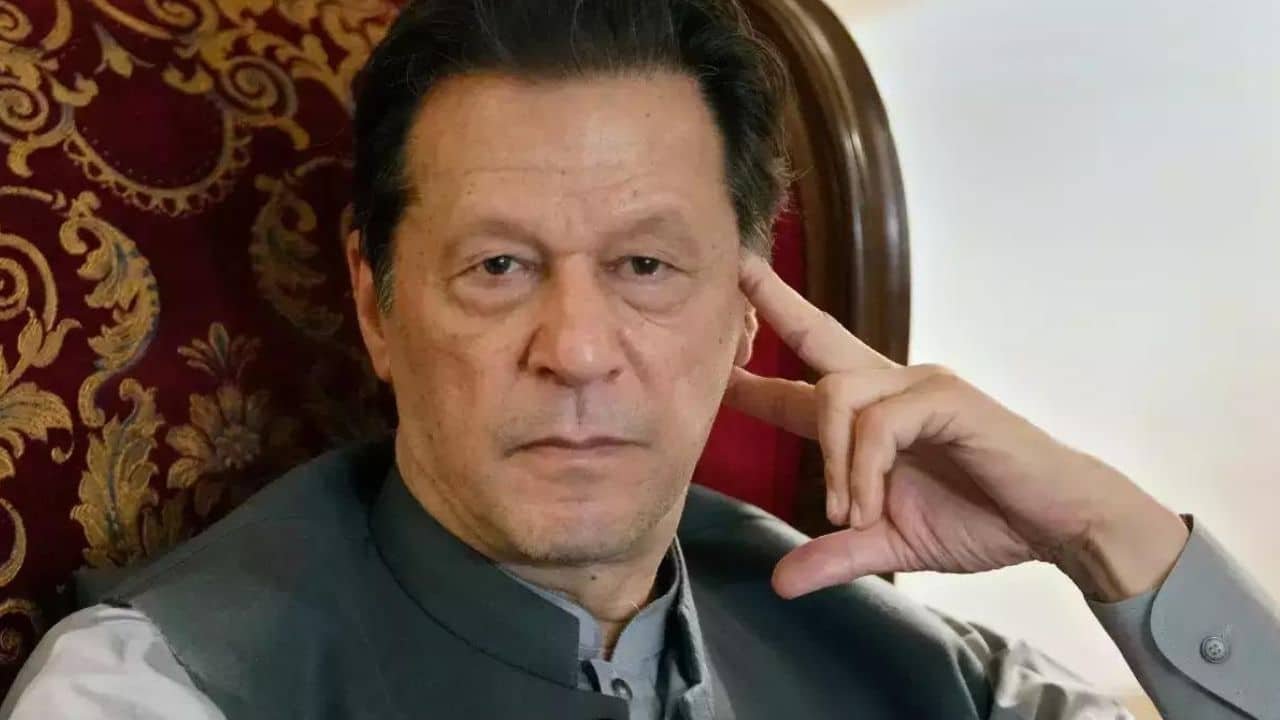
    Is Imran Khan leaving Pakistan?

    Aleema Khan and Uzma Khanum, sisters of Pakistan Tehreek e Insaf (PTI) Chairman Imran Khan, along with his wife Bushra Bibi, met him in Attock Jail on Tuesday, five days after they moved the Islamabad High Court (IHC) seeking permission for the meeting.

    The Khan sisters pleaded with the court they were not allowed to meet the former prime minister by the jail superintendent.

    “We went to meet our brother, former prime minister Imran Khan, in Attock jail on Thursday, but the superintendent did not allow us to meet him,” their plea mentioned, requesting the court to issue directives allowing the meeting to take place.

    During the meeting, Khan’s sisters and wife were accompanied by the party’s legal team comprising four members, as per The News.

    While Aleema and Uzma were meeting their brother for the first time, it was Bushra Bibi’s third visit to her husband, who has been in jail since August 5, after a trial court in Islamabad convicted him in Toshakhana case and handed him a three-year sentence.

    Bushra’s meeting lasted for over an hour during which, it was reported that the couple discussed personal and political issues.

    “Bushra discussed a specific issue with her husband regarding a message from a foreign friend about his settlement abroad,” an intelligence agency source said, as reported by Shakeel Anjum, correspondent of Geo News.

    READ MORE: Imran Khan rearrested in cypher case

  • Robina Khan claims assault on Nabila Salon makeup artist was justified: Mushk Kaleem, models slam attack as ‘disgusting’

    Robina Khan claims assault on Nabila Salon makeup artist was justified: Mushk Kaleem, models slam attack as ‘disgusting’

    On Sunday night, several prominent models like Mushk Kaleem, Ifrah Humayun, Javeriya Haif came forward to condemn the brutality inflicted upon a makeup artist working with Nabila Salon, Bryan William. Model Mushk Kaleem was the first person to break the news, and said that model Robina Khan had her husband assault Bryan on set, because he had refused to carry her personal belongings during the shoot, describing it as something that “appalled” her.

    “Imagine, you’re shooting in peace, and someone’s husband and his goons bring weapons with them, and start physically assaulting someone while you’re shooting. Appalled. Baffled. Disgusted. I hope this model’s name comes out. I hope no designer,/ model/ photographer ever works with her. Also hoping the Nabila team takes corrective measures and protects its employees.”

    Several other models soon came forward to express their solidarity with the makeup artist, and demanded that Robina Khan is banned from working with prominent designers or photographers.

    ‘I know the MUA myself!” wrote Ifrah Humayun. “This act is not acceptable at any cost! This woman needs to be banned and be told that she cannot fuck around with people if she has a coward man and armed people around her.”

    Nabila Salon released a short statement on their Instagram page, where they wrote the brand would work with professionals who value the dignity and safety of their employees.

    Other makeup artists have also come forward to express their solidarity with Bryan, as the instagram user makeupwithshainal wrote:

    “We makeup artists are not your servants. If we kindly refuse to hold your personal belongings may it be a piece of jewellery or anything please accept our request because if that item is mis placed, we get the first accusation saying that we stole it etc as we are the first people to see and deal with models…We are not your servants so please deal with us in a respectful manner.”

    Robina Khan, the model who had led the assault on the makeup artist, has released a statement, alleging that the assault was justified because the makeup artist in question called her a “do takay ki model.”

    ‘The argument started when I requested a makeup artist to carry my phone when I was ready for my shot on shot today. He blatantly said that he was not going to do that and that ‘do takay’ ki model like me should take care of her own stuff and also swore at me, that made me so upset so I in turn swore at him.”

    “I am sure no respectable husband would tolerate anyone abusing at his wife for no reason and when he arrived to pick me, he asked who misbehaved with me and this makeup artist in question very rudely said it was him and what was his problem. My husband got flared up because of this makeup artist’s condescending behavior and slapped him as he said no one has the right to misbehave with his wife this way.”

  • Son gifts mom dolls that she wanted as a kid

    Son gifts mom dolls that she wanted as a kid

    A video of a woman’s reaction to her birthday present from her son has left people emotional. The woman received several dolls from her son – the ones she always wanted as a kid.

    The video was posted on the Instagram page GoodNews Movement along with a sweet caption. “Healing the inner child: She had dreamed of owning these dolls since she was a child. For her birthday, her son fulfilled that dream,” it reads.

    The video opens to show the woman picking her dolls one by one and gently lining them on a table, tears rolling down her eyes while opening her gifts.

    Since being posted, the clip has accumulated close to eight lac views and counting. Additionally, the video has been shared over 40,000 times. People posted varied comments while reacting to the video.

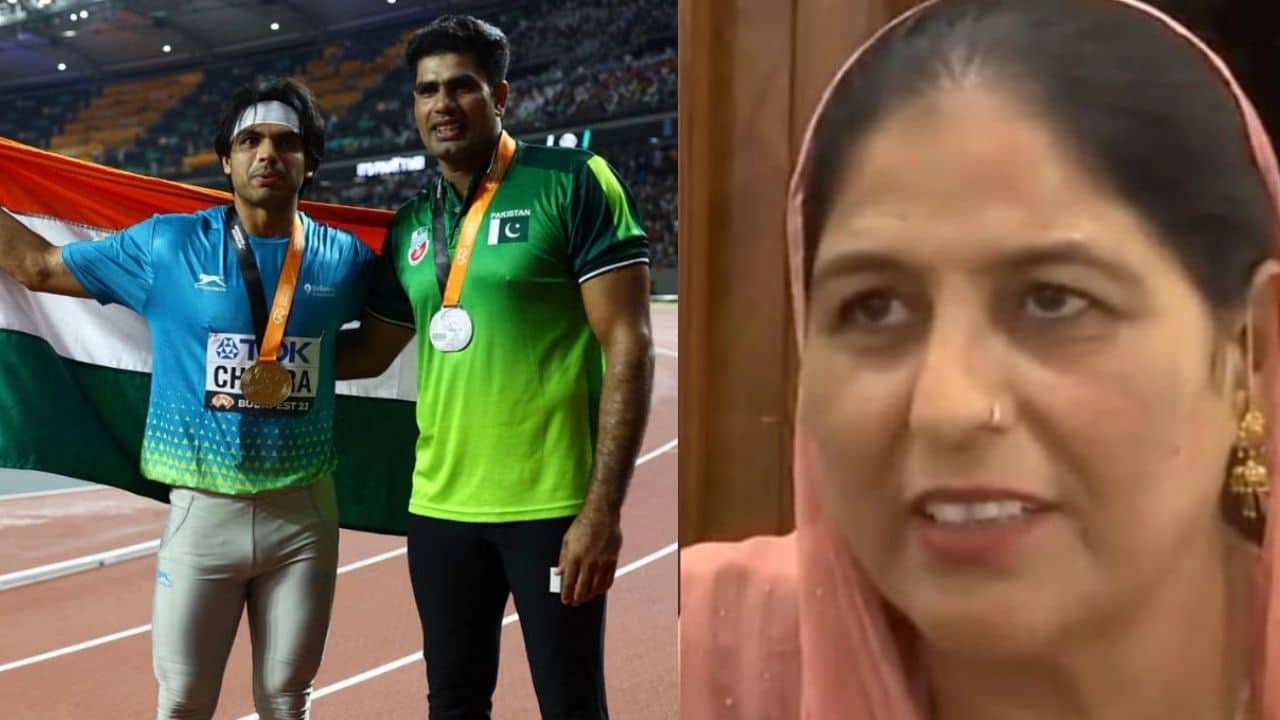
  • ‘Happy that a Pakistani won’: Saroj Devi, Neeraj Chopra’s mother

    ‘Happy that a Pakistani won’: Saroj Devi, Neeraj Chopra’s mother

    Neeraj Chopra’s historic gold and Arshad Nadeem’s record achievement as the first Pakistani to secure a medal in the World Athletics Championship are milestones in their respective careers.

    When a journalist asked Chopra’s mother about his win over Pakistan’s Arshad Nadeem, trying to give an India vs Pakistan narrative to the historic moment, her answer was all love and has gone viral on social media.

    “Look, all have come to play in the field. One or the other will definitely win. So there is no question of being from Pakistan or Haryana,” she said.

    “It is a matter of happiness. Even if that Pakistani had won, there would’ve been great happiness,” she added.

    While Neeraj and Nadeem engage in fierce competition on the field, both young athletes share a profound camaraderie beyond the arena. Beyond the thrill of rivalry, their off-field friendship has been evident through mutual appreciation and support on various occasions. The heartwarming connection serves as a poignant reminder of how the spirit of sportsmanship can not only bridge the gap between nations but also serve as a potent tool in minimizing conflicts.

    In February 2016, the two competed against each other for the first time in the South Asian Games at Guwahati. While Chopra won the gold with a throw of 82.23, Nadeem took the bronze with 78.33 m. The second time the duo faced each other was at the Asian Junior Championships in Vietnam, where Chopra won the silver with a throw of 77.60 m and Nadeem claimed the bronze with 73.40. The India-Pakistan rivalry was seen at the World U-20 Championship in Poland, where Nadeem missed out on qualifying for the final with a throw of 67.17 to finish at the 15th spot. Chopra won that U-20 world title with 86.48, setting a new world U-20 record.

  • More than 60 government officials close to PPP added to stop list

    More than 60 government officials close to PPP added to stop list

    The names of more than 60 Sindh government officials close to the Pakistan People’s Party (PPP) have been out on the stop list, Azaz Syed has reported for The News. The name of Mukesh Chawla, a PPP leader and former provincial minister, is also on the list.

    According to the report, the National Accountability Bureau (NAB) is conducting an investigation against Sindh PPP leader Mukesh Chawla, asking that he be added to the stop list.

    These officials will be investigated by NAB Karachi, Azaz Syed has said.

    On the other hand, according to a report filed by Hasnaat Malik in The Express Tribune, the gap between PPP and the security establishment has grown after the dissolution of Sindh Assembly.
    PPP was unhappy to see that government officials on prominent posts were being transferred during the caretaker government, the report said.

  • No country has raised concerns regarding polls delay, says Foreign Office

    Following reports of senior diplomats expressing reservations regarding the delay in polls in Pakistan, while mentioning that it could have negative effects on Pakistan’s relationships with democratic nations, the Foreign Office said it has not yet received any such communication from any capital, sources told The News.

    If a country raises any doubts and concerns, the authorities can address them, the Foreign Office said.

    If elections are delayed beyond February next year, then that might invoke serious consequences for the country. “Frankly, if elections are delayed beyond February, it will be extremely difficult for us to maintain the same level of bilateral engagement with Pakistan as we are doing now,” a source told Express Tribune.

    It is believed that in case of delay in elections, western countries, might revisit their cooperation with Pakistan. This could negatively impact Pakistan’s engagement with US-led financial institutions, including the International Monetary Fund (IMF).
    Not only Western countries want timely elections but they also want a level playing field for all the political parties. “This is something we will be keeping a close eye on,” said another diplomatic source, referring to media restrictions and crackdown against certain political parties.

    Meanwhile, FO Spokesperson Mumtaz Zahra Baloch clarified that she has no knowledge of any messages from any capital on this matter, as the positions of Pakistan and other countries on the issue are already known.

    The sources revealed that the government is well aware of the European Union’s (EU) stance and the International Monetary Fund’s (IMF) perspective on the matter. If parliamentary elections are deferred without valid reasons, the Generalised System of Preferences Plus (GSP+) trade facility could come under scrutiny.

    It has been reported that United States Ambassador to Pakistan, Donald Blome, and some other senior Western diplomats had held meetings with high-ranking officials in Pakistan, including caretaker Prime Minister Anwaar-ul-Haq Kakar and Chief Election Commissioner (CEC) Sikandar Sultan Raja.

    These meetings were aimed at gaining first-hand assessments of the situation. It is understood that these countries have closely followed the developments in Pakistan regarding election preparations and maintained communication with relevant parties to emphasise the preservation of a democratic environment.

    The sources noted that Pakistan has adequately briefed important capitals on the post-dissolution developments in national and provincial legislatures. The government has assured these capitals that the action will strictly adhere to the Constitution and law. The restriction to hold elections within 90 days following assembly dissolution, as stipulated in the Constitution, has been communicated.

    The sources highlighted that the ECP had recently clarified that there are no intentions to delay elections once the delimitation process concludes. Speculation arose that updating electoral rolls based on new delimitations could lead to further delays.

    The electoral body dismissed the concerns, explaining that updating electoral rolls and delimitation can proceed concurrently, as this is not an uncommon practice and would not cause any delay in elections. The ECP has already set December 14 as the deadline for completing the constituency delimitation process, and the enrollment of new voters will also be completed by this deadline.

  • Air pollution in South Asia can cut life expectancy by more than five years per person

    Air pollution in South Asia can cut life expectancy by more than five years per person

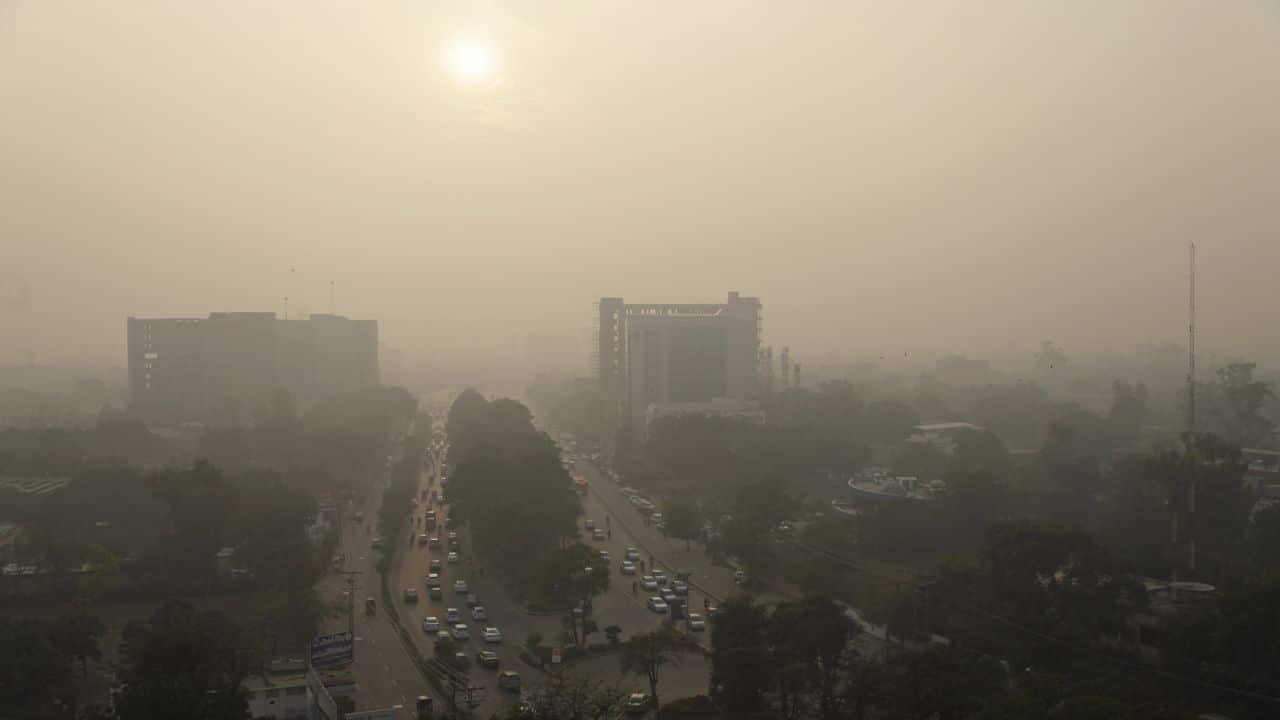
    University of Chicago’s Energy Policy Institute (EPIC) has published its latest report about Air Quality Life Index on Tuesday. The report deduced that rising air pollution can cut life expectancy by more than five years per person in South Asia which is currently one of the most polluted places in the world.

    Primary contributors in the region’s declining air quality are increasing industrialisation and population growth. The particulate pollution levels are resultantly more than 50 percent higher in comparison to the century’s start, posing a much greater health threat.

    What does the report say about Pakistan?
    According to the report, 98.3% of Pakistan’s population lives in areas exceeding the national air quality standard of 15 micrograms per cubic meter.

    From 1998 to 2021, average annual particulate pollution increased by 49.9% in Pakistan and reduced life expectancy by 1.5 years.

    In Punjab, Islamabad, and Khyber Pakhtunkhwa 65.5 million citizens reside (69.5% of Pakistan’s population), with the country’s people potent set to lose between 3.7 to 4.6 years of life expectancy on average relative to the World Health Organization (WHO) guideline and between 2.7 to 3.6 years relative to the national standard if the current pollution levels persist.

    Moreover, if Pakistan is able to meet WHO’s guideline, Karachi residents would gain 2.7 years of life expectancy whereas residents of Lahore would gain 7.5 years and people in Islamabad would gain about 4.5 years of life expectancy.
    Pakistanis would gain 3.9 years by meeting the WHO guidelines of limiting average annual PM 2.5 concentration to 5 micrograms per cubic meter.

    Others in South Asia

    The study further expounds upon other countries in the region.

    In light of the current pollution levels, Bangladeshis can lose 6.8 years of life on average per person compared to 3.6 months in the United States.

    A Nepali would live 4.6 years longer by meeting the WHO guidelines of limiting average annual PM 2.5 concentration to 5 micrograms per cubic meter.

    It is also highlighted that India is responsible for about 59 percent of the world’s increase in pollution since 2013, threatening to reduce lifespan in some of the country’s polluted regions.

    The average lifespan in New Delhi, a heavily populated and the world’s most polluted megacity, is down by more than 10 years.

    The report added that by reducing global levels of lung-damaging airborne particles, known as PM 2.5, to levels recommended by WHO could raise average life expectancy by 2.3 years.

    China has put in work to reduce pollution by 42.3 percent between 2013 and 2021. The report suggested the governments generate accessible air quality data in order to help bridge global inequalities in accessing tools to combat pollution.