Tag: Pakistan

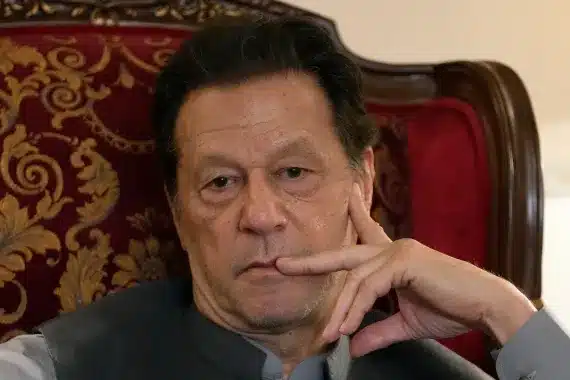
  • Imran Khan rearrested in cypher case

    Imran Khan rearrested in cypher case

    The Islamabad High Court (IHC) has on Tuesday suspended PTI Chairman Imran Khan’s conviction and three-year sentence in the Toshakhana case.

    Imran Khan was rearrested again in the cypher case right after getting bail in the Toshakhana case.
    According to the judgment of Judge Abul Hasnat Zulqarnain, Khan will remain in police custody until August 30.

    Imran Khan was sentenced to jail for three years on August 5 in the Toshakhana Case. As a result of the sentence, the Election Commission of Pakistan (ECP) also banned Imran Khan for five years from contesting elections.

    Imran Khan has to sumbit a surety bond of Rs 100,000 to get bail, as per Geo.

    The former Prime Minister had challenged his sentence in the high court, with today’s verdict coming as a major legal victory.

    Earlier, Judge Humayun Dilawar of a sessions court in Islamabad found former Prime Minister Imran Khan guilty in the Toshakhana case.

    Khan had been disqualified for five years and given a prison sentence of three years.

    He had also been fined Rs 100,000. The judgement also said that if the fine is not paid, the imprisonment can be increased by six months.

  • Imaan Mazari handed to police on three day physical remand

    Imaan Mazari handed to police on three day physical remand

    An anti-terrorism court has handed over Imaan Mazari, the daughter of former federal minister Shireen Mazari, to the police on a three-day physical remand.

    Anti-Terrorism Court Judge Abual Hasanat heard the case against Imaan Mazari in which prosecutor Raja Naveed appeared in court while Zainab Janjua appeared on behalf of Iman Mazari.

    During the hearing, prosecutor Raja Naveed argued that a case had been registered against Imaan Mazari in Bara Kahu police station. The plaintiff accused Imaan Mazari of inciting the youth and instigating them against the state, alleging that he received threats when he broke away from Imaan Mazari’s party.

    Prosecutor Raja Naveed requested the physical remand, which was opposed by her lawyer, saying that a new case was made on the same day that Imaan was supposed to get bail. He asked how can three cases be registered on the same incident.

    She said that a drama is being constructed against Imaan Mazari, while the real purpose of the prosecution against her is something else.

    Imaan’s lawyers requested to discharge her from the case.

    After listening to the arguments of the parties, ATC judge Abual Hasnat reserved the decision, after which she was handed over to the police on a three-day physical remand.

  • After protests, people going to court against LESCO

    After protests, people going to court against LESCO

    After a sharp hike in electricity bills, an increasing number of cases are being filed against LESCO in courts, as people turn towards legal recourse as a last option.

    More than 400 cases were filed against WAPDA within a week.

    The court, taking immediate action, ordered the department to divide the bills into installments.

    Consumers have said that they do not have any other option but to go to court. They have rejected the increase in electricity bills and appealed to the government to provide immediate relief.

  • ‘Psychiatrist told me I had manic depression’, Mahira opens up about mental health

    ‘Psychiatrist told me I had manic depression’, Mahira opens up about mental health

    Superstar Mahira Khan was a guest on Frieha Altaf’s podcast where she opened up about learning to face her mental health struggles, especially after stepping into Bollywood with the Shah Rukh Khan starrer ‘Raees’, and the 2017 incident where pictures of her smoking with Ranbir Kapoor emerged online. She also talked about the 2016 Uri attack, after which Pakistani actors were banned from working in Bollywood.

    Reflecting on that time, the actress revealed she dealt with immense backlash, calling it “unexpected”.

    Mahira said she was getting scary calls, hateful messages to the point that she couldn’t travel to India to promote ‘Raees’, which was heartbreaking and it began creating anxiety and depression. The ‘Hum Kahan Kay Sachay Thay’ actress revealed she was constantly seeing her image on television screens, and getting hateful messages telling her to leave India, and it escalated to the point that her faith broke.

    “I developed severe anxiety to the point that one day I had a panic attack and fainted’ recalled Mahira. “That’s the first time I went for therapy.”

    “But that didn’t work out, as I went to several therapists. But either I was not opening up, or the therapist sitting across me would be looking at me with awe thinking ‘what would she have to complain about’?”

    Raees released in 2017, the same year Mahira’s Pakistani film ‘Verna’ released across Pakistan, and at the same time, the picture scandal happened.

    “I couldn’t sleep, my hands would shake,” the ‘Bin Roye’ actress confessed.

    Mahira said she eventually visited a psychiatric hospital, where she was informed that she had manic depression. The actress said for the past six or seven years she has been on anti-depressants. She once tried quitting the meds in the middle which put her in a dark hole.

    “I did understand that there is something beyond me. Beyond the prayers i will do, beyond the friends that will cheer me up, beyond work and success. There is something not right, and it’s okay.”

    The ‘Superstar’ actress said that by talking about her mental health struggles and breaking the stigma surrounding the topic, she hoped more people would learn to approach others for help rather than treat it with shame.

    “I talk it every chance I get. This is the first time I’m opening up about the fact that I’ve been taking medicine for so many years. And when I tried leaving it like I said it was bad… And I was again in and out of hospitals trying to get help. But yes, everybody has ups and downs, bad times and happy times, but clinical depression is real like any other mental illness or physical illness.”

  • PTI files a petition in court to conduct elections within 90 days of National Assembly dissolution

    PTI files a petition in court to conduct elections within 90 days of National Assembly dissolution

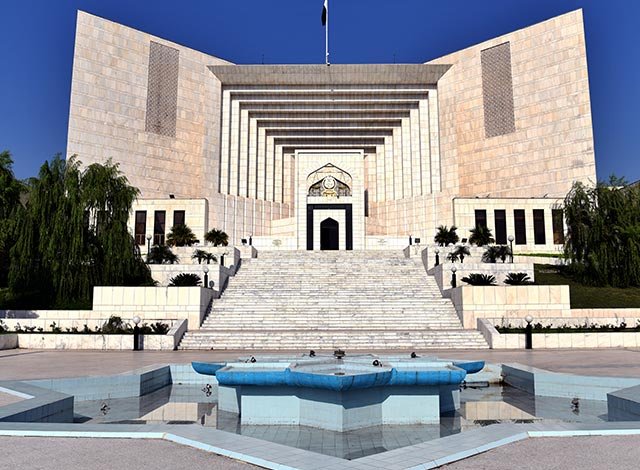
    Pakistan Tehreek Insaaf (PTI) has filed a petition in the Supreme Court (SC) asking for general elections to be conducted in Pakistan within 90 days of the dissolution of the National Assembly (NA), Geo has reported.

    The petitioner, Omar Ayyub, who is also PTI’s Secretary General, requested the court to direct President of the country Dr Arif Alvi to announce a date for the elections and the Election Commission of Pakistan (ECP) to issue an election schedule accordingly.

    On the other hand, the Jamaat-e-Islami (JI) has asked the electoral body to issue an election schedule along with the delimitation schedule in order to avoid any confusion. On Monday, the Muttahida Qaumi Movement-Pakistan (MQM-P) supported the Election Commission of Pakistan (ECP) in holding elections after the delimitation of constituencies.

    According to the ECP’s official statement issued after the meeting, both parties made their stances clear in front of Chief Election Commissioner (CEC) Sikander Sultan Raja, who was also part of the meeting.

  • ‘I am upset’ Maryam Nawaz worried about public’s high bijli bills, says father can save everyone

    ‘I am upset’ Maryam Nawaz worried about public’s high bijli bills, says father can save everyone

    Chief Organiser and Senior Vice President of Pakistan Muslim League-Nawaz (PML-N) Maryam Nawaz Sharif has stated that just as the country was saved from the risk of default within 16 months, similarly, her party under the leadership of former prime minister Nawaz Sharif, will also lessen public burden of inflation and skyrocketing electricity bills.

    “We saved Pakistan from default within 16 months, and now we will shield the people from inflation. It’s upsetting that the public has to face challenges like inflation and increased electricity charges,” she said during a meeting with leaders and officials of the party’s Punjab Women Youth Wing in Lahore.

    “If the process of development had not been halted, there would not have been any tears in the eyes of the common man today. The issues of today have emanated from the four-year era of project Imran,” she added in reference to arch-rival Imran Khan who was deposed through a Vote of No Confidence in April 2022.

    Maryam stated that only an elected government will be capable of curbing the demon of inflation and of initiating a period of progress and contentment.

    “InshaAllah, just as we eradicated load-shedding, terrorism, and lawlessness in Karachi, we can also control inflation. Nawaz Sharif is the guarantee of Pakistan’s progress, and he alone can liberate us from all these issues,” she said.

    She also reviewed the performance of the women youth wing and said that she feels pride in seeing the active participation of many women in political activities.

    Maryam said that it is her desire that more party tickets should be given to the youth in the next election because the youth have the ability to make Pakistan a strong country.

    She claimed that female students like the PMLN leadership because of their performance, claiming that her party had become the largest youth and women’s party in the country.

    “PMLN leadership has always empowered the youth, they were provided with laptops and interest-free loans for decent employment,” she said.

  • Who are the people using free electricity in Pakistan?

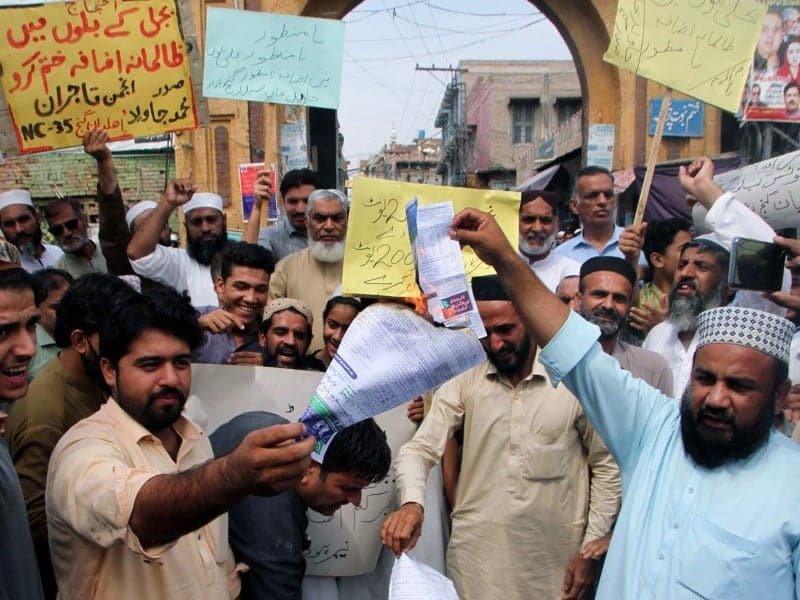
    A sharp hike in electricity bills has led to public protests across the country with consumers burning electricity bills collectively to express their objection to the exorbitant sums. The protesters are demanding that free electricity is not given to WAPDA employees and other officials because it is the general public who has to bear its burden — something they can no longer do.

    We News’ reporter, Bilal Abbasi, has investigated the amount of electricity being used every month by individuals like the Prime Minister, President, Supreme Court and High Court Judges, Federal Ministers, Chairman NAB, Governor State Bank, Senior Bureaucrats and senior government officials.

    Here are the details that We News has uncovered:

    During presidency, unlimited power unit; after retirement, 2000 units per month

    According to the President’s Salary, Allowances and Privileges Act 1975, unlimited electricity units will be provided to the President and after their retirement, the President will be able to use 2000 units per month for free.

    After the death of the president, 2000 units of free electricity will be provided to his widowed wife.

    Similarly, the Prime Minister of Pakistan is also provided unlimited free electricity.

    The Chief Justice of the Supreme Court and other judges have the right to use 2000 units of electricity during and after their service.

    A High Court Judge is provided 800 units of free electricity after retirement.

    22 thousand rupees for utility bills to the Federal Minister

    As per public perception, electricity provided to federal ministers and members of assembly is free of charge; but that isn’t so. Federal Ministers are paid 22,000 rupees in monthly salary to pay all utility bills, while Members of the Assembly are not paid any amount for any utility nor for their official residence ‘Parliament Lodges’.

    Similarly, senior bureaucrats also pay their own electricity bills.

    Chairman NAB 2000 units, Governor State Bank unlimited electricity units

    Chairman NAB is also provided with free electricity units equal to judges of the Supreme Court. They are provided with 2000 units of electricity per month for free.

    The Governor State Bank, however, is provided with unlimited electricity free of cost and the amount is paid by the State Bank. The officers of government institutions are also provided free electricity, but the relevant department/institution pays their bills to WAPDA.

    How many billions of rupees of electricity did WAPDA employees use for free in a year?

    Heavy units are provided free of charge to WAPDA employees and those working in power generation and transmission.

    According to statistics presented by the Ministry of Energy in the Senate Committee, 189,000 WAPDA employees were provided with 34 crore units of electricity for free in a year, using electricity worth 8 billion rupees for free.

    How many electricity units are provided free to WAPDA officers?

    WAPDA earning officers start getting free electricity units from 16th grade onwards. 16th grade officers are provided with 300 units per month, 17th grade officers with 450 units per month, 18th grade officers with 600 units, 19th grade officers with 880 units per month, 20th grade officers with 1100 units while 21st and 22nd scale WAPDA officers are provided with 1300 per month. These power units are provided free of charge. The perks are provided after retirement as well.

  • Son beats father over land dispute; video causes outrage

    Son beats father over land dispute; video causes outrage

    This weekend, a distressing video clip in which a son is brutally beating his father alongside another man in Pakpattan’s Gulshan Farid Colony, was doing the rounds on social media.

    A woman is also seen in the clip, encouraging the son to beat his father.The situation arose due to a property dispute involving four kanals of land.

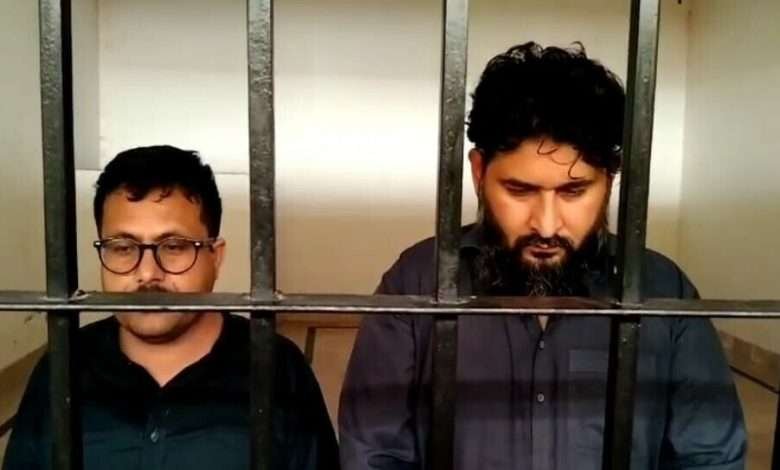
    Resultantly, Pakpattan Police arrested two suspects, including the son, Fahad Rasool and his ally Zulfikar.According to ARY news, the father, Ghulam Farid, is already bedridden.

    People on X (formerly Twitter) condemned the incident with anger.

    https://twitter.com/InayaAjaz/status/1696159152018526301?s=20

    And while people thanked Pakpattan police for swift action, they criticised the blurring of their faces, stating that the culprits should be made an example.

  • Jaranwala and Sargodha incidents were a foreign conspiracy: IG Punajb

    Jaranwala and Sargodha incidents were a foreign conspiracy: IG Punajb

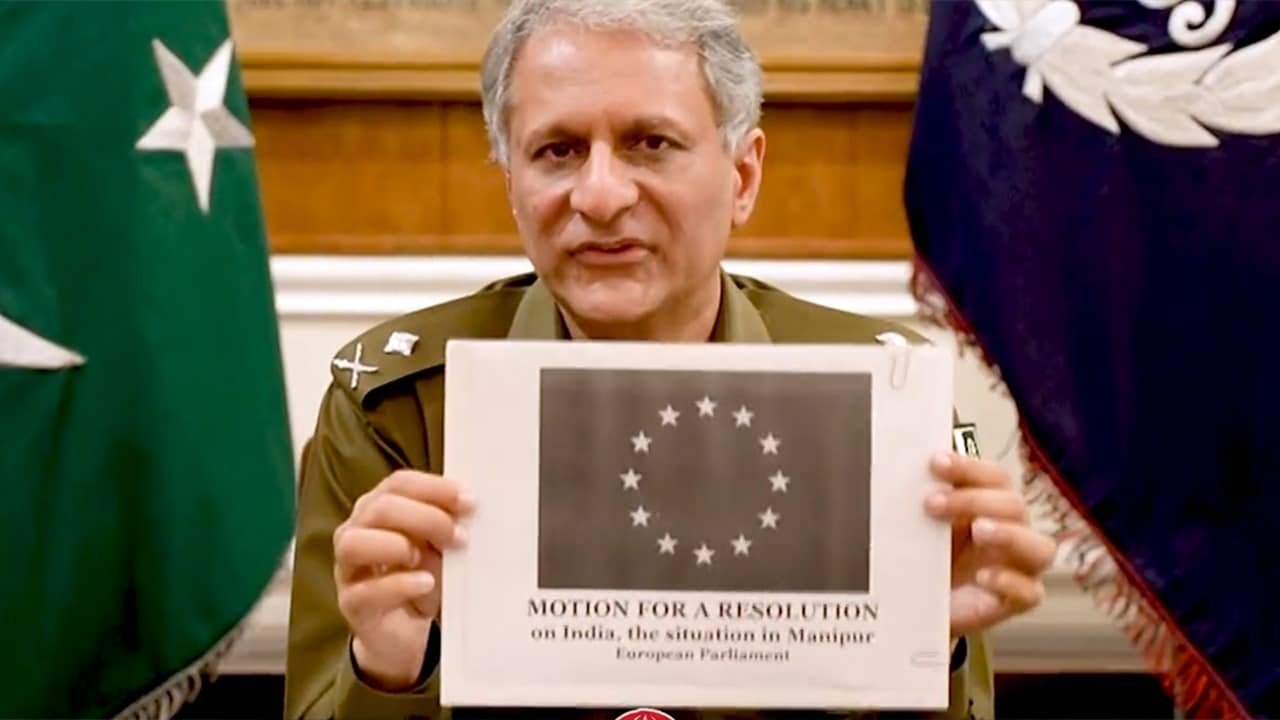
    Inspector General Police, Punjab Dr. Usman Anwar has claimed that no incident like Jaranwala and Sargodha will happen in Punjab again, asserting that the police have “broken the network” of a foreign intelligence agency and the two incidents were “a conspiracy against Pakistan”.

    Punjab Police has uploaded a 4-minute long video on X (formerly Twitter) in which Dr. Usman Anwar explains in detail what led to the two gruesome incidents. He is apparently referring to human rights organisations.

    He pointed out that Christian women were treated badly in the neighbouring country and as a result, a resolution was presented in the European Union condemning the atrocities on Muslims and Christians. Concerns were also raised in North America.

    This was followed by a series of strange incidents like the Jaranwala tragedy and then the desecration of the Holy Quran and conspiracy to harm the minority communities by inciting people started taking place — all to divert the world’s attention.

    “We need to understand this conspiracy and thwart it. More than 2500 police personnel in plain clothes have been deployed to suppress the evil elements, and such elements will be dealt with iron hands.”

    He also added: “We will not let pakistan become a scapegoat for the great injustice that was done across the border”
    IG Punjab has not named any country or intelligence agency as of yet but he assures he will “not let attention be diverted from the rapes and deaths and human rights violations” in Pakistan.

  • Taxes in your electricity bill: What Pakistanis are paying and what for?

    Taxes in your electricity bill: What Pakistanis are paying and what for?

    Protests against exorbitant electricity prices continued to grip Pakistan as consumers from all corners of the country voiced their frustration by burning electricity bills and chanting slogans denouncing overcharging. With Pakistan facing a severe economic crisis and inflation rates surging to a staggering 29 per cent, citizens are grappling with the overwhelming impact of inflated electricity costs.

    The outcry has intensified as incumbent authorities adhering to an IMF deal have slashed power sector subsidies, resulting in unprecedented price hikes that have burdened already inflation-weary citizens. The new pricing structure has set electricity rates at a record high, significantly affecting the cost of living for the nation’s over 240 million inhabitants.

    Central to the grievances is the manner in which electricity bills are calculated. The basic charge is linked to kilowatt-hours (kWh) or units consumed, a component that carries an array of additional taxes. These taxes, directly borne by the masses, have contributed to the mounting frustration felt by the population.

    An individual from Gujranwala recently shared an eye-opening example of the impact of these charges. Despite consuming around 212 units in the previous month, he received an electricity bill of Rs10,500, while the cost of the electricity consumed was merely around Rs6,400. The disparity between consumption and billing has drawn attention to the various components contributing to the final cost.

    For those consuming slightly over 200 units, the Fuel Price Adjustment (FPA) accounts for approximately Rs250. This adjustment is contingent on the price of the fuel used in electricity generation. If the cost of fuel rises during power generation, WAPDA (Water and Power Development Authority) levies an additional charge in subsequent billing cycles.

    Breaking down the bill further, it reveals a complex web of charges. An electricity duty of around Rs100 is imposed, accompanied by a General Sales Tax (GST) of Rs1,316.

    Additional charges include Income Tax amounting to Rs900 and Extra Taxes totaling Rs366. The bill also features a peculiar charge of Rs227 labeled as ‘Further Taxes,’ which has prompted criticism from citizens questioning its purpose and transparency.

    Additional charges on the bill encompass Rs365 for Sales Tax, Rs680 for Financing Cost Surcharge (FC Surcharge), and Rs115 designated as ‘Taxes on FPA.’ Notably, non-filers of income tax are subjected to supplementary charges on their utility bills.

    As confusion mounts among consumers regarding the breakdown of charges, it is imperative for electricity consumers to comprehend the various taxes levied on their monthly bills. Diverse categories of consumers are subject to a range of taxes, duties, and surcharges, contributing to the complex structure of electricity pricing in Pakistan.

    Below is a list of the taxes and levies imposed on electricity consumers in Pakistan:

    Electricity Duty: Ranging from 1.0 per cent to 1.5 per cent of Variable Charges, this provincial duty is levied on all consumers.

    General Sales Tax (GST): At a rate of 17 per cent of the electricity bill, GST is levied on all consumers under the Sales Tax Act 1990.

    PTV License Fee: Domestic consumers pay Rs35, while commercial consumers pay Rs60 as PTV license fee in their electricity bills.

    Financing Cost Surcharge: This surcharge of Rs0.43 per kWh applies to all consumer categories except lifeline domestic consumers.

    Fuel Price Adjustment (FPA): FPA represents the difference between actual fuel charges and reference fuel charges. Positive variation leads to a charge, while negative variation benefits the consumer.

    Extra Tax: Imposed on industrial and commercial consumers not registered in the active taxpayer list, rates range from 5 per cent to 17 per cent based on different bill amount slabs.

    Further Tax: Levied at a 3 per cent rate on all consumers without a Sales Tax Return Number (STRN), except for domestic, agriculture, bulk consumers, and street light connections.

    Income Tax: Charged at varying rates depending on the applicable tariff and the electricity bill amount.

    Sales Tax: Commercial consumers face a 5 per cent sales tax on bills up to Rs20,000 and a 7.5 per cent tax on bills exceeding Rs20,000.

    With public discontent on the rise, authorities are urged to address the concerns of citizens and seek a balanced approach that mitigates the impact of these charges on the already struggling populace.

    As the nation grapples with economic uncertainties, finding a solution that eases the burden on citizens while ensuring the sustainability of the power sector remains a pressing challenge.